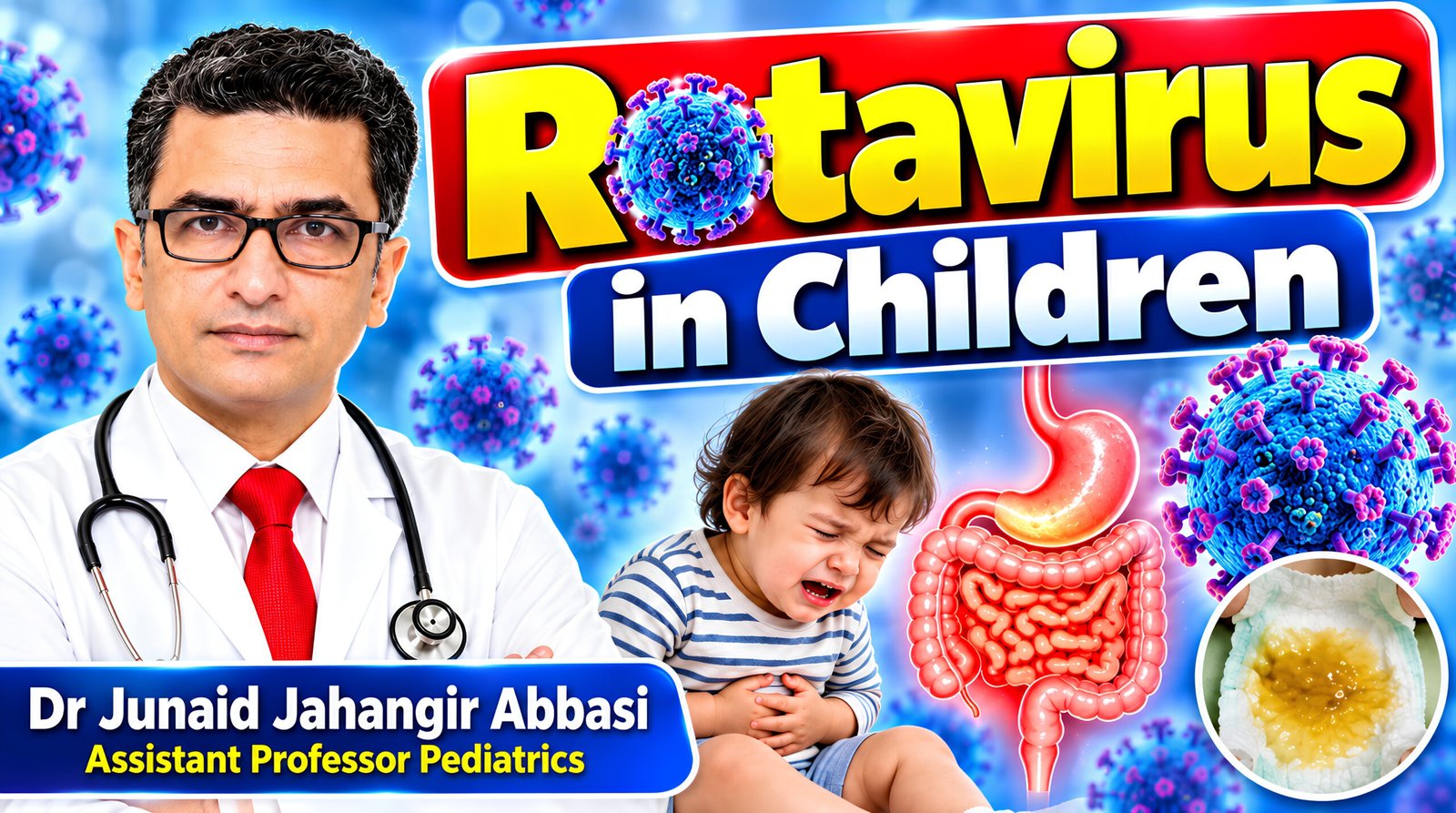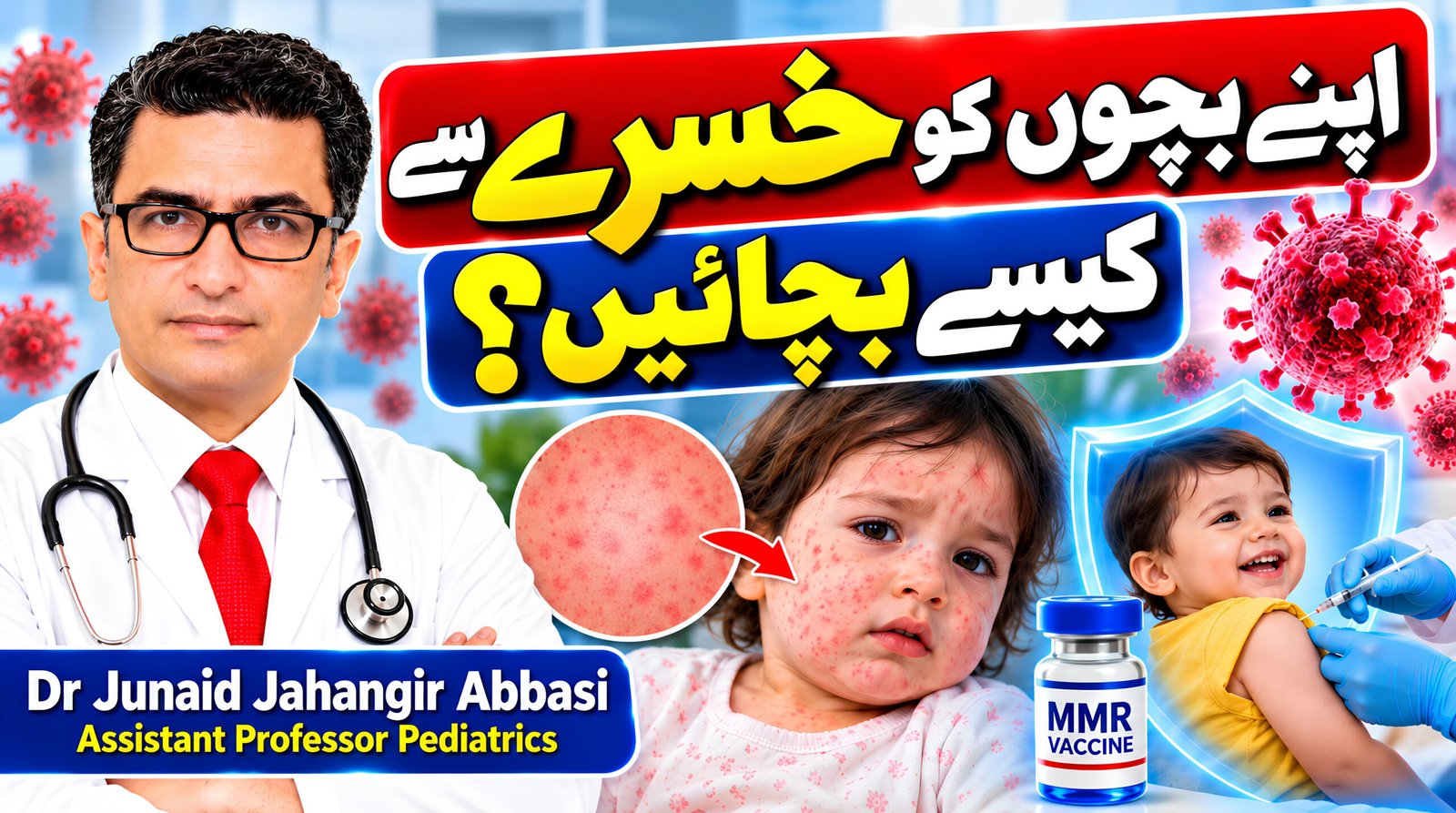
In Pakistan, pediatric gastroenteritis (severe stomach and bowel infections) is not just a messy inconvenience; it is a leading cause of emergency hospital admissions and infant mortality. The most common and most aggressive viral culprit behind these terrifying episodes of severe dehydrating diarrhea is the Rotavirus.
Thankfully, modern medical science has delivered a remarkably effective, completely painless oral vaccine to stop this virus in its tracks. But the Rotavirus vaccine is entirely unique among all childhood immunizations: It comes with a strict, non-negotiable biological deadline. If you miss this narrow window, the vaccine can never be given.
At JJ Medics, located in Margalla Town Phase 2, Islamabad, Dr. Junaid Jahangir Abbasi frequently encounters parents who are unaware of this strict ticking clock. We believe that empowering you with specialized pediatric knowledge is the best way to protect your child from unnecessary suffering.
We will unpack the aggressive pathology of the rotavirus, explain how the sweet-tasting oral vaccine builds an invisible shield in your baby’s gut, and compare premium private options like Rotarix. Most importantly, we will decode the official Paediatric Catch-up Vaccination Schedule, explaining exactly why rotavirus has such rigid age limits and what you must do to ensure your child is protected before time runs out.
The Invisible Threat: Understanding Rotavirus Pathology
To appreciate why the rotavirus vaccine is a mandatory component of your infant’s early immunization schedule, we must first deeply understand how this virus attacks the human body.
Under an electron microscope, the rotavirus looks like a tiny, spiked wheel (the name "rota" comes from the Latin word for wheel). It is a highly contagious enterovirus that is transmitted through the fecal-oral route. Because the virus can survive for days on hard surfaces, toys, and human hands, it spreads like wildfire through daycares, households, and communities. Before the invention of the vaccine, nearly every single child on earth contracted a rotavirus infection by their fifth birthday.
The Attack on the Intestines
When a baby inadvertently ingests the rotavirus, the virus travels through the stomach and enters the small intestine. The small intestine is lined with millions of microscopic, finger-like projections called villi, which are covered in mature cells known as enterocytes. These cells are responsible for digesting food and absorbing water and nutrients into the bloodstream.
The rotavirus specifically targets and invades these mature enterocytes. Once inside, the virus rapidly multiplies, causing the enterocytes to swell and burst.
The Cascade of Dehydration
As the virus destroys the lining of the small intestine, two disastrous things happen simultaneously:
Malabsorption: The damaged intestines can no longer absorb water or digest complex sugars (like the lactose found in breastmilk and formula).
Viral Enterotoxins: The rotavirus releases a specific toxic protein (NSP4) that actually forces the intestinal walls to actively secrete chloride and water out of the body and into the bowel.
This combination results in massive, watery, explosive diarrhea, usually accompanied by a high fever and severe vomiting.
Because an infant’s body is composed of a high percentage of water, and their total blood volume is incredibly small, they cannot withstand this level of fluid loss. Clinical dehydration sets in rapidly. Signs include a sunken fontanelle (the soft spot on the head), a lack of tears when crying, dry diapers for over six hours, and profound lethargy. Without immediate intravenous (IV) fluid resuscitation in a hospital emergency room, rotavirus-induced dehydration can cause catastrophic organ failure.
The Science of Prevention: A Painless Oral Shield
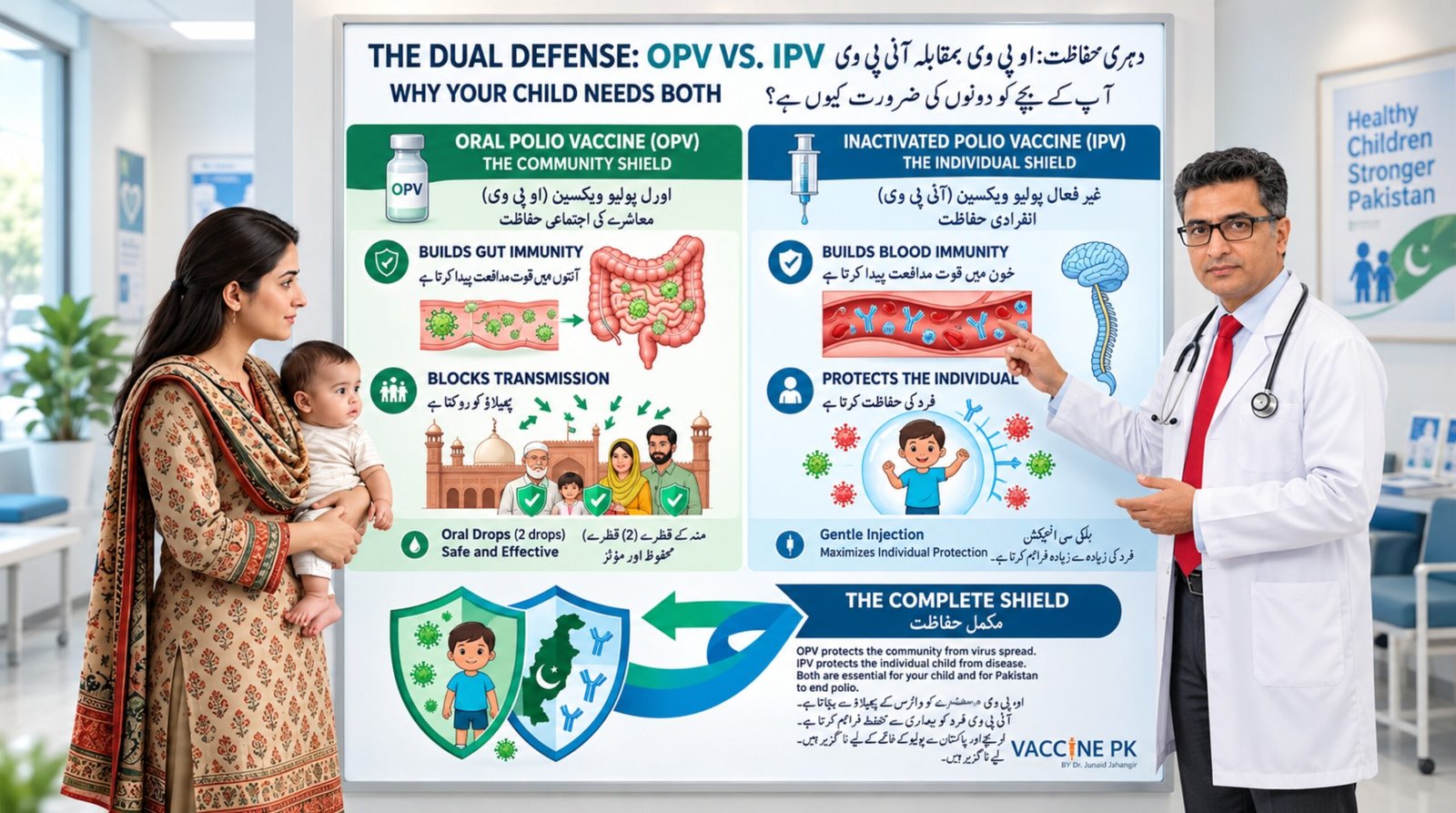
To combat a virus that attacks the gut, scientists needed to build a biological shield directly inside the gut. This is achieved through the live-attenuated oral rotavirus vaccine.
Unlike the Pentavalent, Hexaxim, or Prevenar 13 vaccines—which are injected into the thigh muscle to build systemic antibodies in the bloodstream—the rotavirus vaccine is entirely needle-free. It is administered painlessly via a few drops of a sweet, sugary liquid squeezed directly into the inside of the baby’s cheek.
How Mucosal Immunity Works
The rotavirus vaccine contains a living, but highly weakened (attenuated), strain of the virus. Because it is alive, it must be swallowed so it can travel to the small intestine.
Once in the gut, this weakened vaccine virus replicates slightly in the intestinal lining. It does not cause the explosive diarrhea of the wild virus, but this mild replication is enough to trigger the baby's local immune system. The specialized white blood cells in the gut lining begin mass-producing a specific type of antibody called Secretory IgA.
These IgA antibodies embed themselves in the mucosal lining of the intestines. They act as permanent microscopic security guards. The next time the baby touches a contaminated toy and ingests the real, highly dangerous wild rotavirus, the IgA antibodies instantly recognize the "wheel" shape. They bind to the wild virus, neutralize it, and prevent it from ever entering the enterocyte cells. The virus is harmlessly passed in the stool, and the baby never gets sick.
Private Sector Upgrades: Rotarix vs. RotaTeq
While the national Expanded Programme on Immunization (EPI) provides standard rotavirus coverage, private pediatric clinics like JJ Medics offer access to the world's most premium, globally recognized formulations. In private practice, the decision usually comes down to two highly effective brands: Rotarix (manufactured by GSK) and RotaTeq (manufactured by Merck).
Rotarix: This is a monovalent, human-derived live attenuated vaccine. It is highly efficient because it only requires a 2-dose series. At JJ Medics, we frequently utilize Rotarix (priced at approximately Rs. 5,171 per dose). The massive advantage of Rotarix is its condensed schedule. By receiving doses at 2 months and 4 months of age (or exactly at 6 and 10 weeks), the infant achieves complete, robust immunity much earlier in life.
RotaTeq: This is a pentavalent, human-bovine reassortant vaccine. It requires a 3-dose series (typically given at 2, 4, and 6 months of age).
Both vaccines exhibit profound, world-class efficacy in preventing severe, hospitalizing rotavirus gastroenteritis. Dr. Junaid Jahangir Abbasi will consult with you to determine the best option for your child, but our preference often leans toward the 2-dose Rotarix to finalize your baby’s protection as swiftly as possible.
The Ticking Clock: The Strict Catch-Up Limits Explained
This is the most critical section of this entire guide.
With almost every other pediatric vaccine—whether it is Polio, Pentavalent, or Pneumococcal—if you miss a dose, you simply catch up later. As we discussed in our previous guides, you never restart the series; you just give the missed dose at a delayed interval, even if the child is 2 or 3 years old.
The Rotavirus vaccine is the absolute exception to this rule.
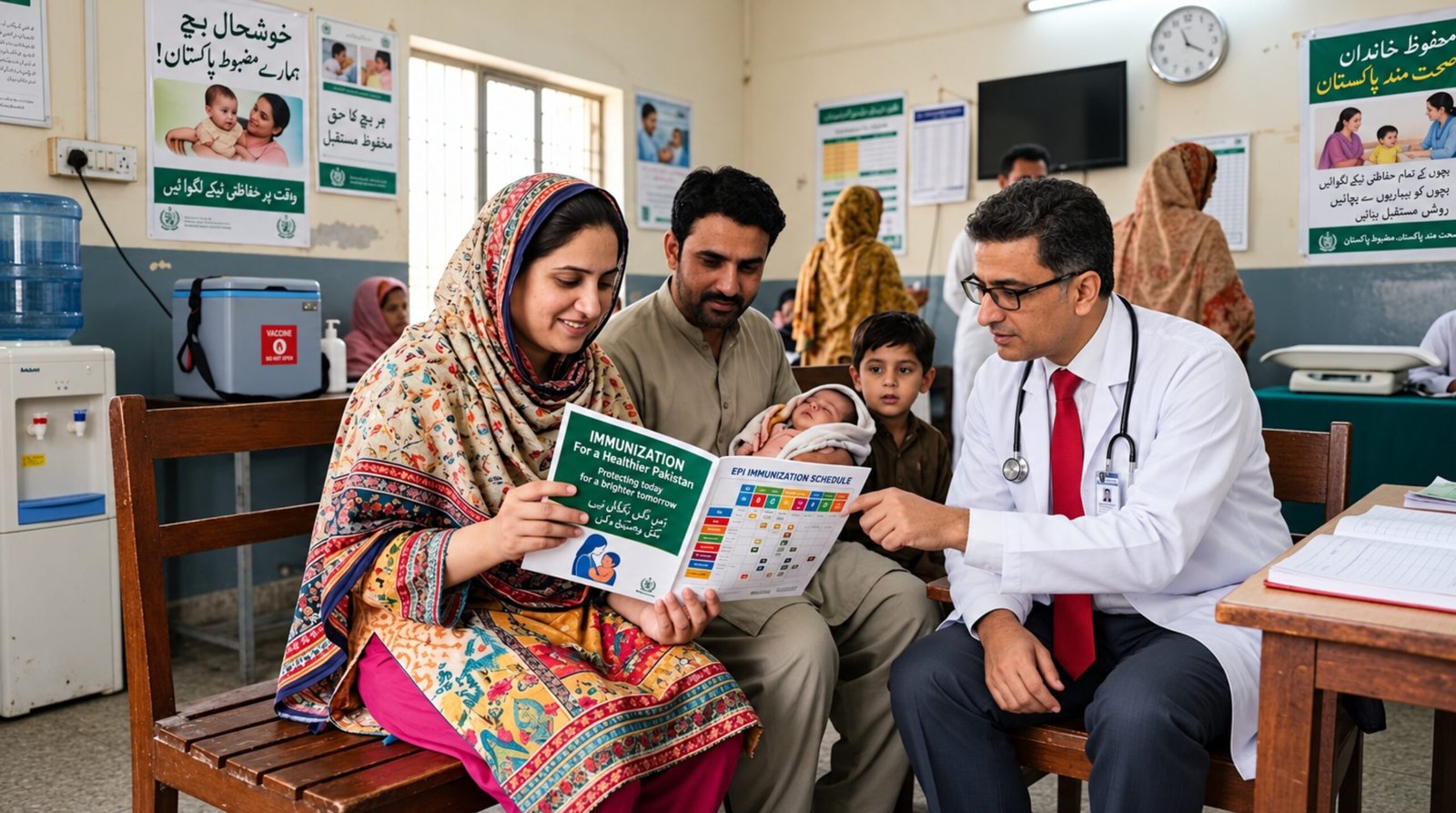
If you review the official Paediatric Catch-up Vaccination Schedule for Pakistan, you will notice a glaring red warning next to Rotavirus. For children aged 1-2 years, it says: "Only if within permitted age limit." For children aged 2-5 years, there is a giant red 'X' stating: "Not routinely given after 24 months."
However, the international private standard utilized by top pediatricians—and mandated by the WHO and CDC—is actually far stricter than 24 months. The true, biological deadline is measured in weeks, not years.
The Biological Deadlines
The First Dose Deadline: The absolute maximum age to administer the very first dose of the rotavirus vaccine is 14 weeks and 6 days. If your baby turns 15 weeks old and has never had a rotavirus drop, the window has permanently closed. We cannot give it.
The Final Dose Deadline: The entire series (whether the 2-dose Rotarix or the 3-dose RotaTeq) must be definitively completed before the baby reaches 32 weeks (approximately 8 months) of age. No doses can ever be given after a child turns 8 months old.
Why is There a Strict Deadline? (The Intussusception Risk)
Parents frequently ask Dr. Junaid, "Why can't you just give it to my one-year-old? What is the danger?"
The danger is a rare, but severe, bowel condition called Intussusception.
Intussusception occurs when a section of the intestine folds (or telescopes) into the adjacent section of the intestine, much like a collapsible telescope. This causes a severe bowel obstruction, cutting off the blood supply to the intestines, and often requires emergency surgery to unfold it.
Intussusception is a natural, albeit rare, condition that occurs in infants globally, usually peaking between 5 and 9 months of age, completely independent of any vaccines. However, extensive clinical trials conducted decades ago revealed a very small, theoretical increased risk of intussusception if the live rotavirus vaccine is administered for the first time to an older infant.
To completely eliminate this risk, global health authorities implemented the strict age cutoffs. By initiating the vaccine very early (at 6 weeks) when the natural risk of intussusception is practically zero, and finishing the series before the baby turns 8 months old, the vaccine is incredibly safe and highly effective.
The Golden Rule: If you miss the 15-week window for the first dose, the vaccine must be skipped entirely. We cannot bend this rule, as it is in place to guarantee your baby’s absolute safety.
What if My Baby Spits the Vaccine Out?
A very practical, common fear among parents administering oral vaccines is spit-up. The Rotarix vaccine is designed to be sweet to encourage swallowing, but babies are unpredictable. What happens if Dr. Junaid administers the drops, and the baby immediately drools it out, spits it up, or vomits five minutes later?
Clinical guidelines are very clear on this scenario: Do not readminister the dose.
The rotavirus vaccine is highly concentrated. Even if it appears the baby spit most of it out, the mucosal lining of the mouth and the throat absorbs the live vaccine virus almost instantly on contact. A sufficient amount of the vaccine always reaches the intestines to trigger the necessary IgA mucosal immune response. Repeating the dose is unnecessary and goes against clinical protocols.
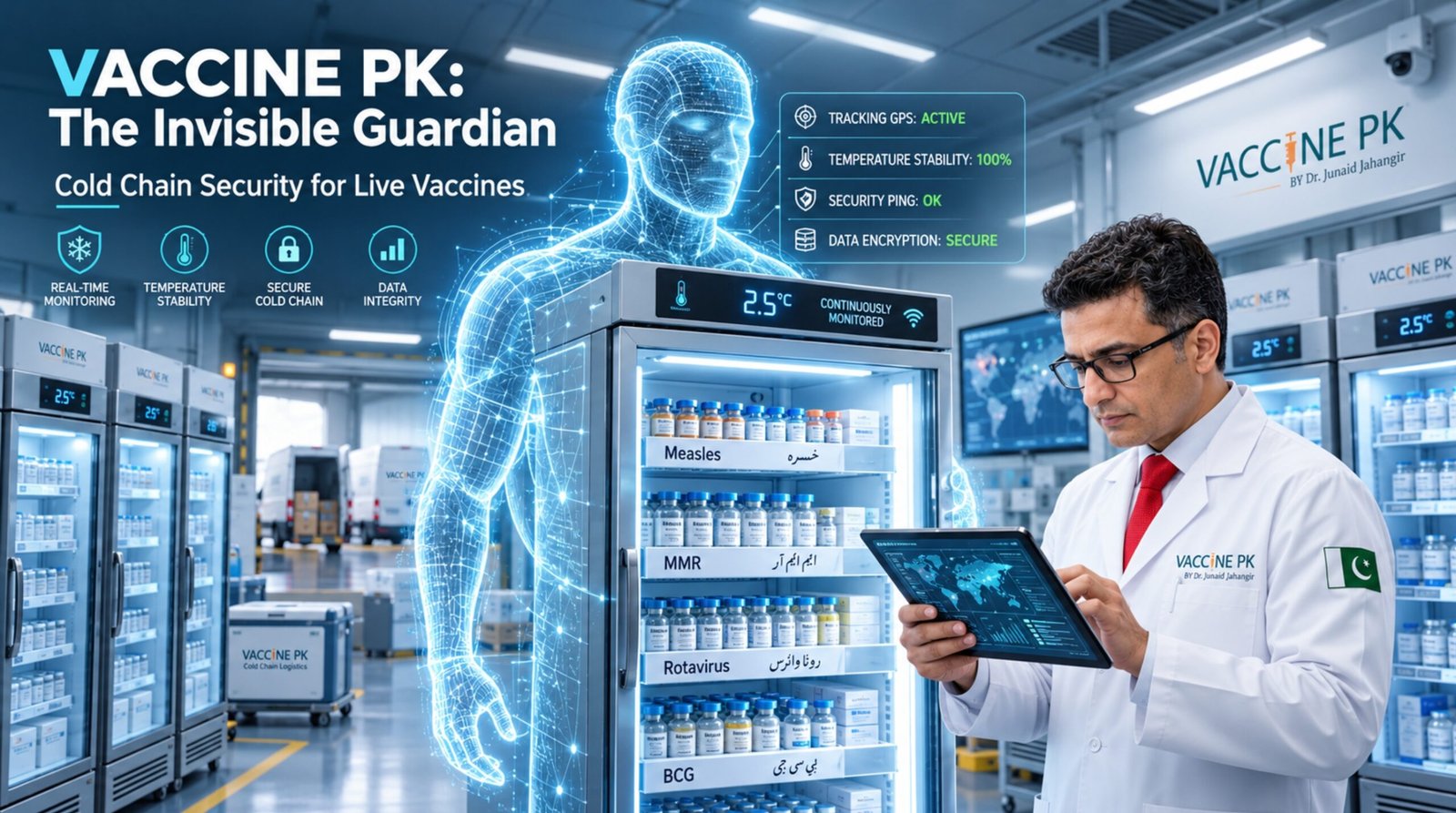
The Invisible Guardian: Protecting Live Oral Vaccines
As we have emphasized in every educational guide, a vaccine is only as effective as the cold chain that protects it. However, the oral Rotavirus vaccine requires special attention because it is a live-attenuated virus.
Unlike the inactivated Pentavalent or Prevenar 13 vaccines (which are destroyed by freezing), live viral vaccines like Rotarix are exquisitely sensitive to heat.
If a clinic's refrigerator loses power during a sweltering Islamabad summer afternoon, the rising ambient heat will rapidly denature and kill the live rotavirus inside the oral applicator. If a doctor squeezes a heat-killed rotavirus vaccine into your baby’s mouth, the baby will swallow the sweet liquid, but their immune system will not mount any response whatsoever. They will remain completely vulnerable to severe diarrhea.
The JJ Medics Zero-Compromise Cold Chain
You cannot taste or look at the liquid to know if the virus inside is alive or dead. You must rely on the technological integrity of the clinic you choose.
At JJ Medics, we completely eliminate the risk of thermal damage. We do not use standard domestic kitchen refrigerators, which are highly susceptible to temperature fluctuations during door openings or load-shedding. Our facility is equipped with advanced, medical-grade Ice-Lined Refrigerators (ILRs) that are fully certified by the World Health Organization (WHO).
These ILRs feature thick, high-density polyurethane insulation and an internal lining of specialized ice packs. This guarantees that the internal temperature remains strictly locked in the safe zone of +2°C to +8°C. Even if the national power grid fails completely, our solar-backed ILRs will maintain this perfect thermal corridor for up to 15 hours.
When our clinical staff prepares your baby’s Rotarix drops, you can have absolute confidence that the biological shield entering your child's body is 100% alive, potent, and ready to protect them.
What to Do if You Missed the Window Entirely
If you are reading this guide and your child is already 9 months old, 1 year old, or older, and they never received the rotavirus vaccine, do not despair. While we cannot administer the vaccine due to the strict biological cutoff, we can empower you with the tools to manage the illness should it occur.
If an unvaccinated toddler contracts a severe stomach bug, rapid parental action prevents emergency hospitalizations:
Hydration is Everything: The moment severe diarrhea begins, initiate Oral Rehydration Salts (ORS). Do not just give plain water, as the body is losing critical sodium and potassium. ORS replaces these vital electrolytes.
Zinc Supplements: Pediatric guidelines strongly recommend administering zinc syrup during a diarrheal episode. Zinc helps regenerate the damaged enterocyte cells in the intestines and significantly shortens the duration of the diarrhea.
Continue Feeding: Do not starve the child to "rest the bowel." Continue breastfeeding on demand. If the child is on solids, offer small, frequent, easily digestible meals.
Seek Immediate Care: If the child cannot keep ORS down, if their eyes appear sunken, or if they have not passed urine in 6 to 8 hours, bring them to JJ Medics immediately for clinical evaluation and potential IV fluid support.
Conclusion: Don't Let Time Run Out
The Rotavirus vaccine is a medical triumph. By simply swallowing a few drops of a sweet liquid, your child is granted an invisible, lifelong shield against a virus that causes unimaginable distress, severe dehydration, and life-threatening complications.
However, this is the one vaccine where procrastination or delayed catch-ups are not an option. The biological clock starts ticking the day your baby is born, and the window closes permanently before they are even four months old.
Secure Your Child’s Gut Immunity Today
Do not let the strict 15-week deadline pass you by. Whether your newborn is due for their crucial 6-week routine visit, or you are seeking premium, painless private vaccines like Rotarix and Hexaxim, Dr. Junaid Jahangir Abbasi and the specialized team at JJ Medics are ready to provide world-class care.
Location: Plot 20, Street 38, Margalla Town Phase 2, Islamabad.
In-Clinic Timings: Monday to Friday, 04:00 PM – 09:00 PM.
Video Consultations: Monday to Friday, 09:00 AM – 09:00 PM.
Book Your Appointment Now: Call us directly at 051-8151800 or use our integrated WhatsApp booking feature on VaccinePK.com to schedule your baby's stress-free, timely vaccination visit.
]]>