Yet, familiarity often breeds complacency. Because OPV drops are administered so frequently—both in private clinics and by dedicated door-to-door polio campaign workers—many parents in Islamabad and Rawalpindi begin to view them as a simple routine rather than a complex and life-saving biological shield.
Questions inevitably arise: If my child gets the drops at the door, do they still need the injection at the clinic? How many doses are actually required? And what happens if we miss a scheduled dose during a routine visit?
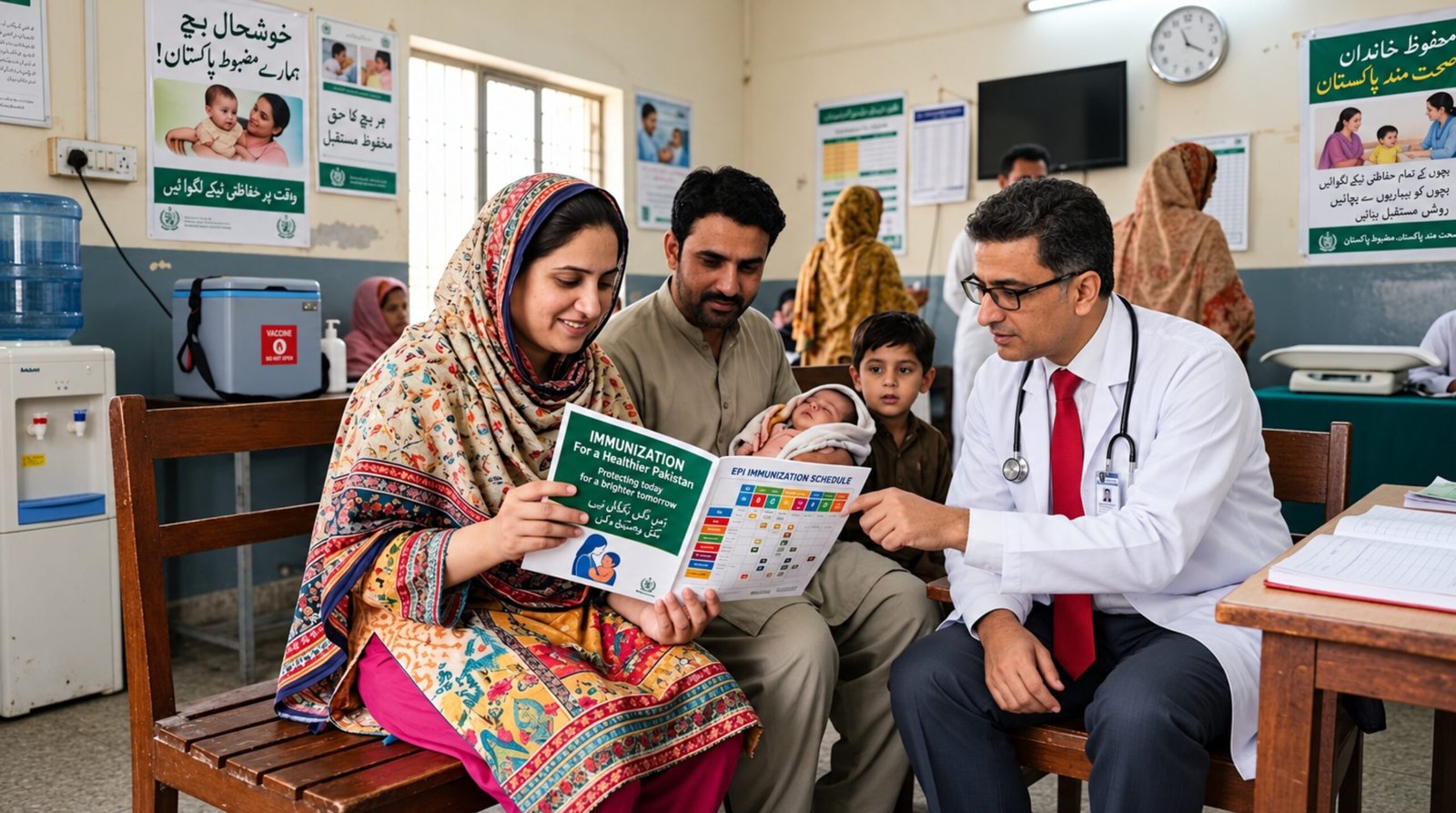
At JJ Medics in Margalla Town Phase 2, Islamabad, Dr. Junaid Jahangir Abbasi and his clinical team are committed to answering these questions with complete medical transparency. We believe that eradicating polio begins with educating parents.
We will explore the aggressive pathology of the wild poliovirus, the fascinating science behind how oral drops create immunity in your baby’s gut, the critical difference between OPV and IPV, and the exact catch-up protocols to follow if your child falls behind on their routine polio schedule.
The Persistent Threat: Why Polio is Still a Reality in Pakistan
To understand why the Oral Polio Vaccine is administered with such relentless dedication, we must look at the global epidemiological map. Today, the wild poliovirus has been eradicated in almost every single country on Earth—except for two. Pakistan and neighboring Afghanistan remain the last standing endemic reservoirs for wild poliovirus type 1 (WPV1).
The Pathology of Poliovirus
Polio (Poliomyelitis) is a highly infectious viral disease caused by an enterovirus. It is an incredibly stealthy and resilient pathogen. The virus is transmitted primarily through the fecal-oral route. In regions with developing sanitation infrastructure, the virus sheds in the feces of an infected person and can easily contaminate the local water supply or food sources.
When a susceptible, unvaccinated infant ingests contaminated water or touches a contaminated surface and puts their hands in their mouth, the poliovirus enters their digestive tract.
From the Gut to the Nervous System
Once inside the body, the virus rapidly multiplies in the cells lining the throat and the intestines. For many children, the infection stops here, causing mild flu-like symptoms or gastrointestinal distress. However, the true danger of polio lies in its ability to breach the intestinal wall.
In a small but devastating percentage of cases, the multiplying virus escapes the gut and enters the infant's bloodstream. From the blood, it crosses the blood-brain barrier and aggressively invades the central nervous system. The poliovirus specifically targets and destroys motor neurons—the nerve cells in the spinal cord that control muscle movement.
Acute Flaccid Paralysis
When these motor neurons are destroyed, the brain can no longer send signals to the muscles. The muscles instantly become floppy and unresponsive, a condition known as Acute Flaccid Paralysis (AFP). This paralysis most commonly affects the legs, leaving the child permanently disabled. In the most severe cases, the virus attacks the muscles of the diaphragm, paralyzing the lungs and causing death by asphyxiation unless the child is placed on a mechanical ventilator.
Crucially, there is absolutely no cure for polio. Once the motor neurons are destroyed, the paralysis is irreversible. The only medical intervention that exists is entirely preventative. The virus must be stopped before it ever breaches the intestinal wall.
The Science of OPV: How Two Drops Build a Shield
To stop a virus that multiplies in the gut, scientists needed a vaccine that builds immunity in the gut. This is the brilliant science behind the Oral Polio Vaccine (OPV), originally developed by Dr. Albert Sabin in the 1950s.
Unlike injected vaccines that go into the muscle, OPV is a live-attenuated vaccine administered orally. It contains living, but severely weakened, strains of the poliovirus.
Mucosal Immunity: The Frontline Soldiers
When the two drops of OPV are placed on your baby’s tongue and swallowed, the weakened vaccine viruses travel directly to the intestines. Because they are alive, they begin to replicate in the intestinal lining, exactly as the wild, dangerous virus would.
However, because the vaccine virus is so weak, it does not make the baby sick, and it cannot invade the nervous system. Instead, this harmless replication triggers the baby's local immune system. Specialized white blood cells in the gut lining create a massive deployment of secretory IgA antibodies.
This creates what immunologists call mucosal immunity. The next time your child accidentally ingests contaminated water containing the real, wild poliovirus, these gut-level antibodies immediately recognize the threat. They neutralize and destroy the wild virus in the intestines before it can multiply, before it can enter the bloodstream, and before it can ever reach the spinal cord.
Contact Immunity: Protecting the Community
OPV has a secondary, miraculous public health benefit. After a baby receives OPV, they excrete the weakened vaccine virus in their diapers for a few weeks. In areas with poor sanitation, this weakened, safe vaccine virus can actually spread to other unvaccinated children in the neighborhood, passively giving them mild immunity as well. This is known as "contact immunity" and is the primary reason OPV is used in mass eradication campaigns to rapidly blanket a community in protection.
The Dual Defense: OPV vs. IPV (Why Your Child Needs Both)
A frequent point of confusion for parents at JJ Medics is the presence of two different types of polio vaccines on their child’s immunization card: OPV (Oral Polio Vaccine) and IPV (Inactivated Polio Vaccine).
Parents often ask, "If my baby just had the drops, why are you also giving them a polio injection?"
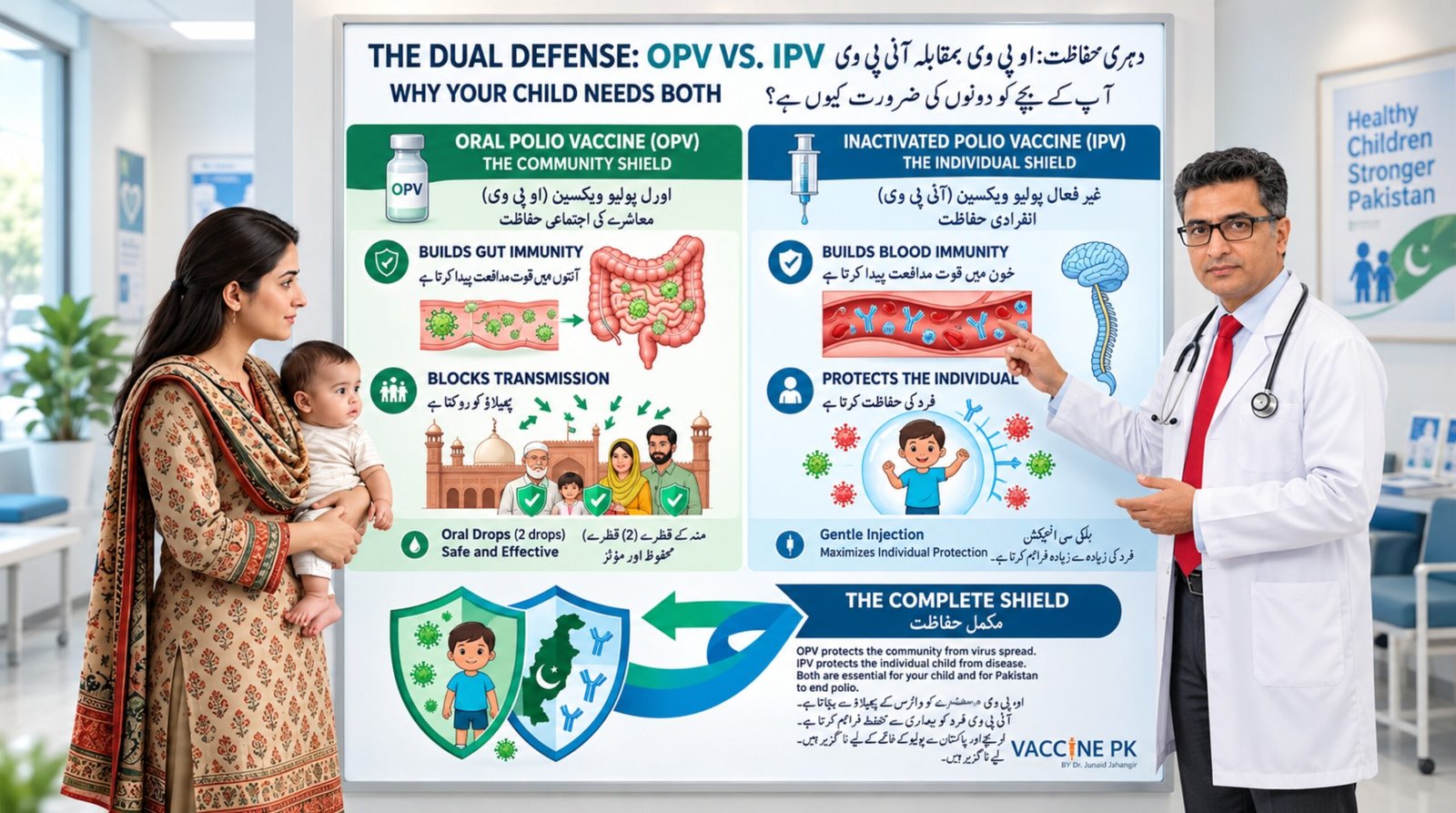
The answer lies in building an impenetrable, two-layered fortress of immunity. Modern pediatric medicine in Pakistan requires the strategic use of both vaccines simultaneously. Here is why:
1. The Outer Wall: OPV (Gut Immunity)
As discussed, the oral drops build mucosal immunity in the intestines. This stops the virus from multiplying and prevents the child from shedding the virus in their stool, essentially stopping the transmission of the disease within the community.
2. The Inner Fortress: IPV (Bloodstream Immunity)
The Inactivated Polio Vaccine (IPV) is given as an injection (and is included seamlessly within the premium painless Hexaxim vaccine offered at JJ Medics). IPV is not a live vaccine; it uses a dead virus.
Because it is injected directly into the muscle, IPV bypasses the gut entirely. Instead, it triggers a massive production of IgG antibodies directly in the child’s bloodstream.
If, for any reason, a highly aggressive wild poliovirus manages to slip past the gut defenses built by OPV and enters the baby's blood, the IPV antibodies are waiting. They act as the final, impenetrable line of defense, neutralizing the virus in the blood before it can cross into the spinal cord and cause paralysis.
OPV stops transmission and protects the community.
IPV guarantees individual systemic protection against paralysis.
By utilizing both, Dr. Junaid Jahangir Abbasi ensures your child receives the highest standard of comprehensive polio defense available in modern medicine.
The Routine OPV Schedule: Getting It Right from Birth
Because the wild poliovirus is incredibly aggressive and highly prevalent in our environment, protection must begin on day one. The routine immunization schedule for OPV in Pakistan is highly structured to provide continuous, overlapping layers of gut immunity during the most vulnerable months of a child’s life.
At Birth (OPV-0): The first dose, known as the "zero dose," is administered as soon as possible after birth, alongside the BCG and Hepatitis B vaccines. This primes the newborn's entirely naive immune system.
6 Weeks (OPV-1): The first primary dose.
10 Weeks (OPV-2): The second primary dose.
14 Weeks (OPV-3): The third primary dose.
Clinical Spacing Rule: It is vital that these primary doses (at 6, 10, and 14 weeks) are separated by a minimum interval of ≥ 4 weeks. This 28-day gap ensures that the live vaccine viruses from the previous dose have cleared the baby’s system, preventing viral interference and allowing the immune system to fully process the new dose.
Missed Doses? The OPV Catch-Up Protocol
Despite the best efforts of parents, clinic visits can be delayed. Given the endemic nature of polio in Pakistan, any delay leaves a dangerous window of vulnerability. If you look at your baby’s vaccination card and realize they have missed their 10-week or 14-week OPV drops, our message at JJ Medics remains consistent: Do not panic, and never restart the series.
As outlined in the official Paediatric Catch-up Vaccination Schedule, OPV catch-up is straightforward but highly critical.
Catch-Up for Toddlers (1 to 2 Years Old)
If a child between 12 and 24 months of age has incomplete polio records, the clinical directive is simple: Complete missed doses.
If your child only received OPV at birth and 6 weeks, they are missing two primary doses.
During your catch-up visit with Dr. Junaid, we will immediately administer OPV-2. We will then schedule you to return exactly 4 weeks later to administer the final OPV-3 dose.
Because OPV is an oral vaccine, it can be safely and easily administered on the exact same day as any other delayed injections (such as catch-up Hexaxim or Prevenar 13) without causing any additional pain or stress to the toddler.
Catch-Up for Older Children (2 to 5 Years Old)
For children older than two who are under-immunized against polio, the catch-up protocol requires us to complete the primary series according to the national EPI schedule.
Furthermore, the catch-up guidelines explicitly state to utilize the national polio campaigns.
Addressing the "Door-to-Door" Campaign Confusion
A very common scenario in Islamabad and Rawalpindi involves parents asking, "My child just got polio drops from the campaign workers at my front door last week. Do they still need the routine clinic drops today?"
The answer is Yes.
National Supplementary Immunization Activities (SIAs)—the door-to-door campaigns—are designed to rapidly boost population-level immunity to stop an active outbreak. These campaign drops are extra doses. They are not intended to replace the structured, chronologically spaced primary doses recorded on your child’s official vaccination card.
Even if your child received drops at the door recently, they must still complete their official routine and catch-up clinic schedule to ensure their individual immunity is fully established and documented. Dr. Junaid Jahangir Abbasi will review your child's record during your visit to ensure no overlapping doses violate the strict 4-week minimum interval rule.
The Invisible Threat: Protecting the Cold Chain for OPV
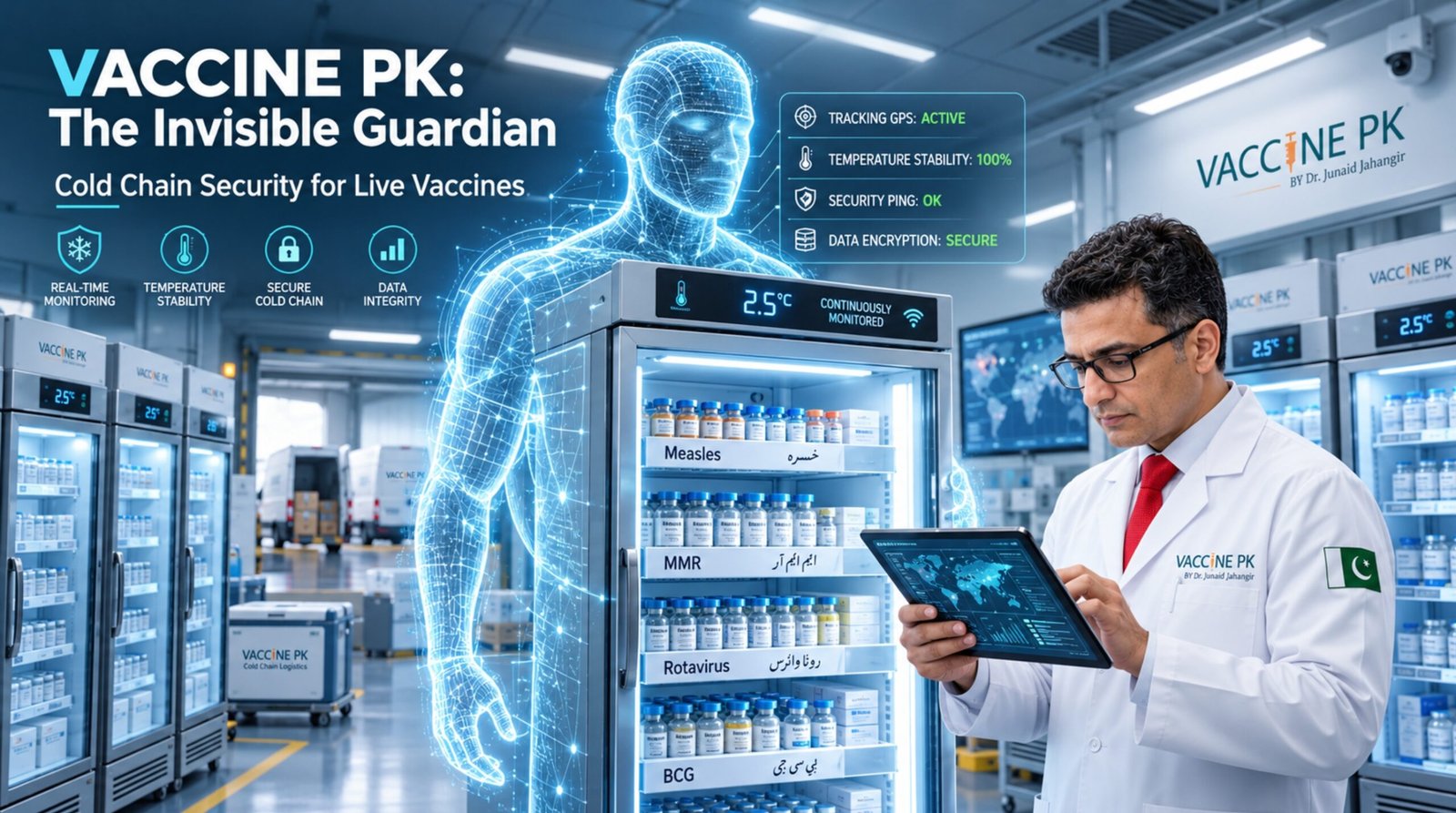
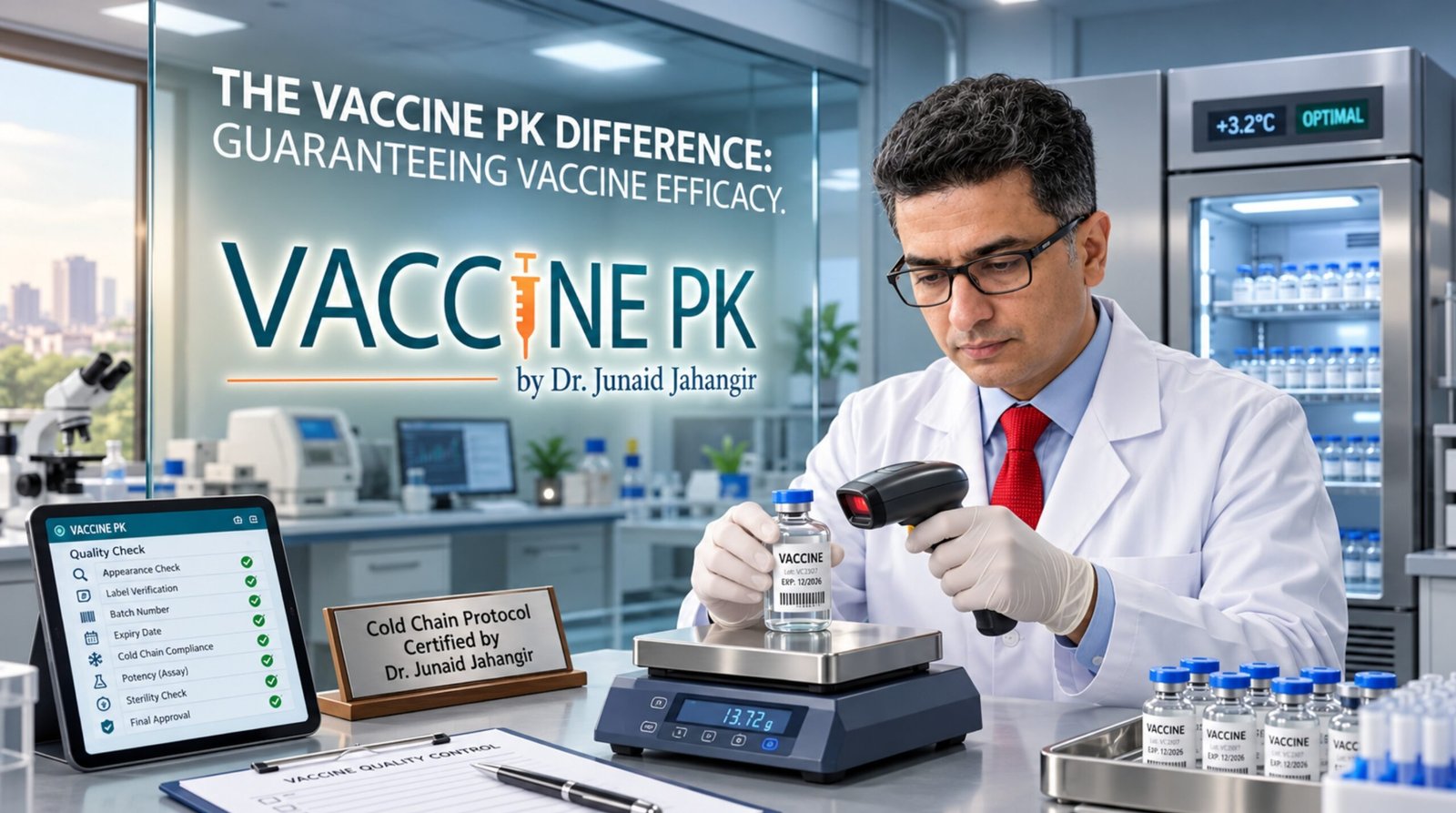
As we have emphasized in our previous deep dives, a vaccine is only as strong as its cold chain storage.
Because the Oral Polio Vaccine is a live-attenuated virus, it is exquisitely sensitive to heat. In fact, OPV is one of the most heat-sensitive vaccines in the entire pediatric schedule. If the tiny plastic dropper bottle is left on a warm counter in a clinic, or stored in a standard kitchen refrigerator during a severe Islamabad power outage, the live weakened viruses inside will rapidly die (denature). A baby given heat-killed OPV drops will swallow the liquid but receive zero immunity.
The Invention of the Vaccine Vial Monitor (VVM)
The extreme heat sensitivity of OPV is precisely why the Vaccine Vial Monitor (VVM) was invented in the first place. Global health organizations needed a way to guarantee that campaign workers carrying cooler boxes in sweltering 45°C weather were administering potent vaccines.
Every single legitimate bottle of OPV has a VVM sticker on it. It features a small square inside a circle. As long as the square remains noticeably lighter than the outer circle, the vaccine is safe, potent, and alive. If the square darkens to match the circle, the cold chain has been broken, and the vaccine is dead.
The JJ Medics Guarantee
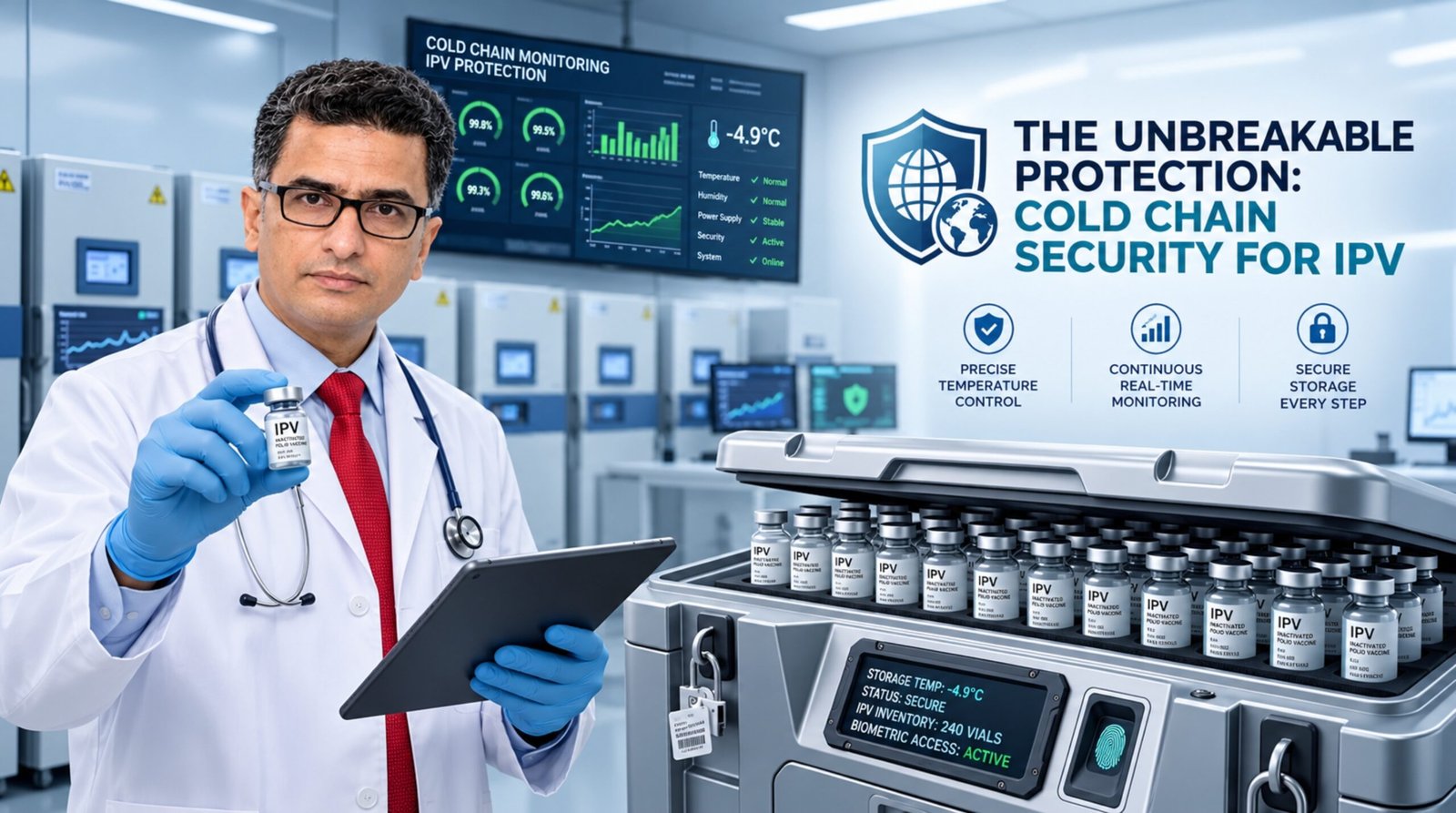
At JJ Medics, we leave nothing to chance. We do not rely on standard domestic refrigerators to protect our live vaccines. Our clinic utilizes advanced, WHO-certified Ice-Lined Refrigerators (ILRs) equipped with continuous digital temperature loggers. Even if the local power grid fails entirely, our ILRs maintain an unbreakable internal temperature of +2°C to +8°C for up to 15 hours.
When our clinical staff prepares to administer OPV drops to your child, they will physically present the bottle to you. We will show you the VVM and ensure you can visually verify that the inner square is lighter than the circle. We want you to be 100% confident that the drops entering your baby’s mouth carry the full, life-saving biological power intended by science.
Conclusion: Securing a Paralysis-Free Future
The fight against polio in Pakistan is a collective effort, but it begins at an individual level, with informed parents making proactive choices. The two pink drops of the Oral Polio Vaccine represent one of the greatest triumphs of modern medicine—a painless, simple, and remarkably effective method of building localized mucosal immunity against an ancient paralyzing threat.
When combined with the systemic protection of the IPV injection (available within the premium Hexaxim vaccine), and when supported by strict adherence to catch-up schedules and flawless cold chain management, you are providing your child with an impenetrable biological shield.
Do not let a missed appointment leave a gap in your child’s defenses. Whether you are bringing your newborn in for their very first OPV dose, or seeking an accelerated catch-up plan for a toddler who has fallen behind, expert pediatric care is essential.
Ensure Your Child’s Defenses are Complete
Book your child’s routine or catch-up polio vaccination appointment with Dr. Junaid Jahangir Abbasi at JJ Medics today. Let us help you keep your child, and our community, safe from polio.
Location: Plot 20, Street 38, Margalla Town Phase 2, Islamabad.
In-Clinic Timings: Monday to Friday, 04:00 PM – 09:00 PM.
Video Consultations: Monday to Friday, 09:00 AM – 09:00 PM.
Book Now: Call us directly at 051-8151800 or use our integrated WhatsApp booking feature on VaccinePK.com to secure your appointment.
]]>