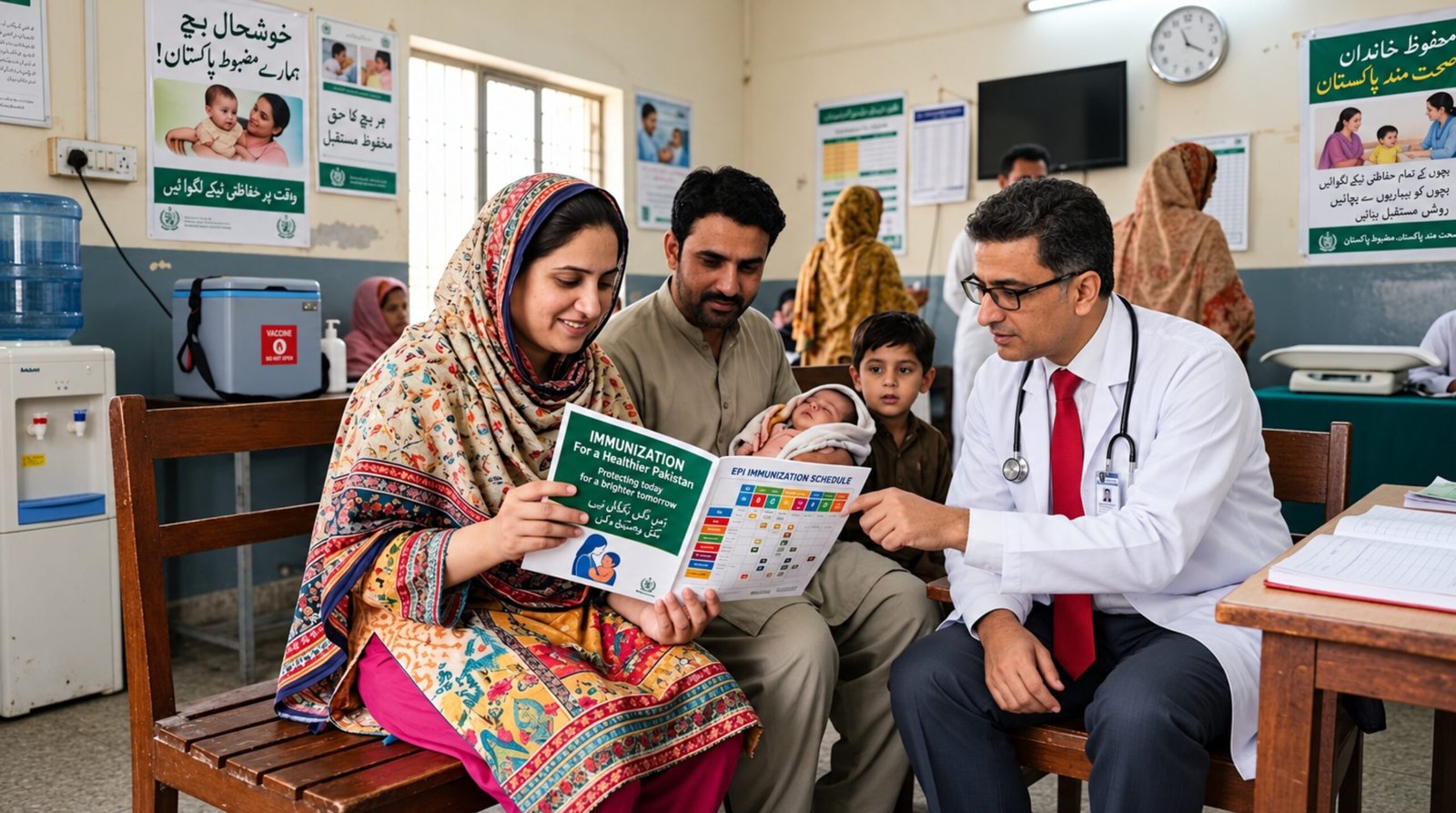
In Pakistan, the pediatric immunization schedule begins at birth. Before you even leave the hospital, or during your very first clinical visit, your pediatrician will recommend the administration of the BCG vaccine, alongside the initial oral polio drops and the Hepatitis B birth dose.
For many parents in Islamabad and Rawalpindi, the BCG vaccine is a source of immediate anxiety. Unlike other vaccines that are injected into the thigh and leave no trace, the BCG is injected into the upper arm and intentionally causes a weeks-long skin reaction that results in a permanent scar. Watching a blister form on your perfect newborn’s arm can be distressing if you do not understand the science behind it.
At JJ Medics, located in Margalla Town Phase 2, Islamabad, Dr. Junaid Jahangir Abbasi believes that parental anxiety is best cured through education. When you understand exactly what a vaccine is doing, fear is replaced by confidence.
We will unpack the pathology of Tuberculosis, explain the exact week-by-week healing process of the BCG scar, debunk the "no scar" myth, and highlight why having a highly qualified pediatric expert administer this specific vaccine is vital for your child’s safety.
Understanding the Threat: The Tuberculosis Epidemic in Pakistan
To understand why the BCG vaccine is the very first injection your child receives, we must confront a harsh epidemiological reality. Pakistan currently ranks among the top countries in the world with the highest burden of Tuberculosis (TB).
Tuberculosis is an ancient, aggressive bacterial infection caused by the pathogen Mycobacterium tuberculosis. It is a highly contagious, airborne disease. When an infected adult coughs, sneezes, or even speaks, microscopic droplets containing the TB bacteria are expelled into the air. These droplets can linger in poorly ventilated spaces for hours. If a healthy person inhales these droplets, the bacteria enter the lungs and begin to multiply.
Why Newborns are Exceptionally Vulnerable
In healthy adults, the immune system can often wall off the TB bacteria in the lungs, preventing it from spreading (a condition known as latent TB).
However, a newborn baby’s immune system is naive, immature, and still developing. When an infant inhales TB bacteria, their body does not have the cellular infrastructure required to contain the infection in the lungs. Instead, the aggressive bacteria rapidly enter the infant's bloodstream and spread throughout their tiny body.
In infants and toddlers, TB frequently develops into two severe, life-threatening extra-pulmonary (outside the lungs) conditions:
TB Meningitis: The bacteria attack the meninges—the delicate protective membranes surrounding the brain and spinal cord. This causes catastrophic neurological inflammation, leading to seizures, permanent brain damage, and, tragically, a high mortality rate if not treated immediately.
Miliary TB: The bacteria spread uncontrollably through the bloodstream, seeding tiny, millet-like lesions in multiple major organs simultaneously, including the liver, spleen, and bone marrow, causing rapid systemic organ failure.
The BCG vaccine is not designed to completely prevent a person from ever catching a mild lung infection later in life. Instead, its primary, life-saving purpose is to prevent the deadly, disseminated forms of TB (like meningitis and miliary TB) in infants and young children.
The Science of BCG: Bacille Calmette-Guérin
The BCG vaccine is one of the oldest and most widely used vaccines in human history, celebrating over a century of protecting children globally.
Unlike the acellular vaccines (like Hexaxim) which use dead, purified proteins, the BCG is a live-attenuated vaccine. It was originally developed by two French scientists, Albert Calmette and Camille Guérin. They took a strain of tuberculosis that naturally infected cows (Mycobacterium bovis) and spent 13 years carefully growing it in a laboratory until it became so weak (attenuated) that it could no longer cause disease in a healthy human.
When this weakened, living bacterium is injected into your baby’s skin, it acts as a perfect biological training simulator.
Because the bacteria are alive, your baby’s immune system reacts vigorously. Specialized white blood cells called macrophages rush to the injection site, consume the weakened bacteria, and present them to the T-cells. This interaction creates robust, long-lasting cellular memory. If your child is later exposed to the real, highly dangerous human TB bacteria circulating in Pakistan, their T-cells will instantly recognize the threat and destroy it before it can cross into the brain or bloodstream.
The Administration Challenge: Why Expert Technique Matters
One of the most critical aspects of the BCG vaccine is how it is administered into the baby’s body. Most pediatric vaccines (like the Pentavalent, Hexaxim, or Prevenar 13) are injected intramuscularly—meaning the needle goes deep into the thick muscle of the baby's thigh.
The BCG vaccine is entirely different. It must be administered intradermally.
Intradermal administration means the vaccine must be injected precisely into the extremely thin layer of the dermis—just barely under the very top surface of the skin on the left upper arm (the deltoid region).
The Importance of the "Wheal"
Administering an intradermal injection to a wriggling newborn requires immense clinical skill, steady hands, and pediatric experience. When the pediatrician injects the BCG correctly, a small, pale, raised bump—resembling a mosquito bite or a blister—must instantly appear on the baby’s skin. In medical terms, this is called a "wheal." The appearance of this wheal is the visual confirmation that the vaccine has been successfully placed in the correct layer of the skin.
The Dangers of Subcutaneous Injection
If a vaccine is administered by an inexperienced practitioner, there is a risk that the needle goes too deep, pushing the live vaccine into the subcutaneous fat layer beneath the skin.
When the live BCG bacteria are injected too deeply, the immune response happens under the skin rather than on the surface. This can lead to severe, painful complications, including:
Severe Abscesses: Large, painful pockets of pus that develop deep under the skin, which may require surgical drainage.
Suppurative Lymphadenitis: The live vaccine travels to the lymph nodes under the baby’s armpit or in their neck, causing them to swell massively and occasionally burst open.
This is why choosing a highly qualified pediatric specialist like Dr. Junaid Jahangir Abbasi at JJ Medics is paramount. Our clinical team utilizes precision techniques to ensure the BCG is administered perfectly, triggering the correct immune response and avoiding unnecessary complications.
The Signature Scar: A Week-by-Week Guide to Healing
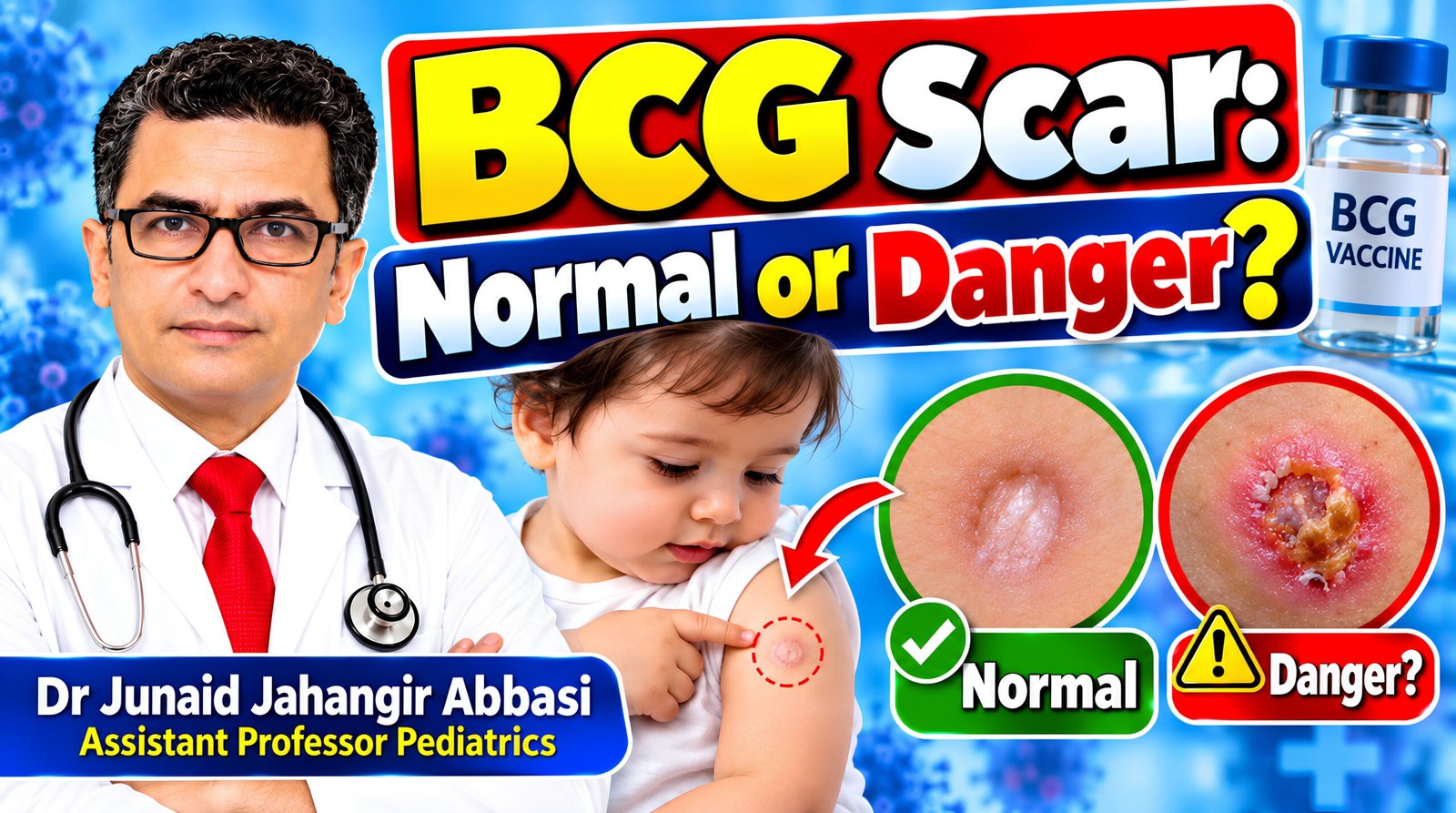
The most unique characteristic of the BCG vaccine is the localized skin reaction it produces. For new parents, watching this reaction evolve over several weeks can be highly alarming if you do not know what to expect.
It is crucial to understand that this skin reaction is not an infection or a side effect; it is the exact, intended immune response. It proves the vaccine is working.
Here is the standard week-by-week timeline of a normal BCG reaction:
Week 1 to 2 (The Quiet Phase): Immediately after the injection, the initial raised "wheal" will disappear within an hour. For the first week or two, the baby’s arm will look completely normal, perhaps with just a tiny, flat red dot where the needle entered.
Week 3 to 4 (The Red Bump): A small, firm, red bump will begin to develop at the injection site. It may look like a small pimple. It is generally painless and will not bother the baby.
Week 5 to 6 (The Blister and Ulcer): The red bump will slowly enlarge and fill with a yellowish or whitish fluid, looking like a blister. Over the next few days, this blister will naturally burst, creating a small, shallow ulcer (an open sore). It may leak a small amount of clear fluid or pus. This is the stage where parents usually panic—but it is entirely normal.
Week 7 to 10 (Crusting and Healing): The small ulcer will begin to dry out, and a crust or scab will form over it. This scab may fall off and reform a few times.
Week 10 and Beyond (The Scar): Eventually, the scab will fall off for the final time, leaving behind a small, round, slightly indented permanent scar. This scar is a lifelong biological badge proving your child is protected against severe TB.
Crucial Advice for Parents During the Healing Process
Because the BCG reaction looks like a wound, parents often feel the urge to treat it medically. Dr. Junaid Jahangir Abbasi explicitly warns parents against this. Interfering with the BCG reaction can disrupt the immune process and cause severe irritation.
DO NOT squeeze or pop the blister. Let it burst naturally on its own time.
DO NOT apply any antiseptic liquids (like Dettol or Pyodine) to the area. These chemicals can kill the live vaccine bacteria and ruin the immunization process.
DO NOT apply antibiotic ointments, creams, or steroid lotions.
DO NOT cover the area with a tight bandage or a sticking plaster. The ulcer needs air to dry and heal.
DO bathe your baby normally. If water runs over the ulcer, gently pat it dry with a clean, soft towel. Do not rub it.
Note: You only need to consult the clinic if the ulcer becomes larger than 1.5 centimeters (the size of a large coin), if the baby develops a high fever, or if you notice significant swelling in the baby's armpit (swollen lymph nodes).
The "No Scar" Dilemma: Does My Baby Need Another Dose?
One of the most frequent questions posed during pediatric consultations at JJ Medics involves a missing scar. Sometimes, parents bring their one-year-old in for a checkup, and upon inspection, there is absolutely no BCG scar on the child's left arm, despite the vaccination card indicating it was administered at birth.
Parents immediately ask, "Did the vaccine fail? Does my baby need to be injected again?"
The answer, based on strict WHO guidelines and modern immunological research, is No. Do not revaccinate.
Clinical studies have shown that approximately 10% to 20% of healthy infants who receive a perfectly administered, potent BCG vaccine will simply not develop the signature scar.
The absence of a scar does not mean the absence of immunity. The child’s T-cells were still activated, and their cellular memory against TB was still successfully established. The exact reason some children scar and others do not is linked to individual genetics and how deeply the immune response occurred in the skin layers.
As explicitly stated in the national pediatric catch-up protocols: BCG is a strict one-dose vaccine. It is never repeated. Giving a child a second dose of BCG because they lack a scar provides no additional immunity and only increases the risk of severe localized side effects, such as deep abscesses. Rest assured, if the dose is documented on your child's immunization card from a reputable clinic, they are protected.
Missed the Birth Dose? The BCG Catch-Up Protocol
While the BCG is ideally administered at birth or within the first few days of life, we understand that medical complications (such as premature birth, neonatal ICU stays, or severe illness) can delay this critical intervention.
If your child missed their birth dose, JJ Medics employs strict catch-up protocols to ensure they receive their protection safely:
Infants (Under 1 Year): The BCG should be administered as soon as the infant is clinically stable and healthy. As discussed in our previous guides, prematurity is not a contraindication. Once a premature baby reaches a weight of 2,000 grams and is ready for discharge, the BCG can be safely administered.
Toddlers (1 to 2 Years): If a child between one and two years of age presents to the clinic with no documented BCG dose and no visible scar, Dr. Junaid will administer a single catch-up dose.
Children (2 to 5 Years and Older): Catch-up vaccination beyond the age of two is not routinely recommended for all children. As a child grows, their immune system naturally matures, and their risk of developing catastrophic TB meningitis drops significantly. For older children, the necessity of the BCG vaccine is assessed individually by Dr. Junaid based on their specific living environment and whether they have been in close contact with an adult actively suffering from pulmonary TB.
The Invisible Guardian: Cold Chain Security for Live Vaccines
As we extensively covered in our dedicated Cold Chain guide, vaccines are incredibly fragile. However, live-attenuated vaccines—like the BCG and the MMR—are exceptionally vulnerable to heat.
Because the BCG contains a living, breathing, albeit weakened, bacterium, exposing the vial to high temperatures acts like a death sentence for the vaccine. If a clinic's refrigerator loses power during a sweltering Islamabad summer afternoon, the heat will rapidly denature and kill the live Mycobacterium bovis inside the vial.
If a doctor injects a heat-killed BCG vaccine into a newborn, the child will endure the needle prick, but their immune system will not mount a response. They will not develop a scar, and tragically, they will not develop any immunity against TB meningitis.
At JJ Medics, we eliminate this risk entirely. Our facility is equipped with WHO-certified Ice-Lined Refrigerators (ILRs) and solar-backed power systems. These advanced medical units maintain a flawless, unbreakable internal temperature of +2°C to +8°C for up to 15 hours without grid electricity.
Furthermore, we utilize digital data loggers and physically inspect the heat-sensitive Vaccine Vial Monitor (VVM) before every single injection. When Dr. Junaid Jahangir Abbasi administers a BCG vaccine to your newborn, you can have absolute confidence that the biological shield being transferred to your child is 100% alive, potent, and ready to protect them.
Conclusion: Start Your Child’s Journey with Confidence
The BCG vaccine is your child’s very first line of defense in a country where Tuberculosis remains a pervasive threat. It is a brilliant piece of medical science that leverages a localized, highly visible immune response to build lifelong, invisible protection against catastrophic neurological and systemic infections.
Watching the BCG blister form and heal can be a nerve-wracking experience for first-time parents. But armed with the knowledge of how the immune system works, you can view that small scar not as an injury, but as a biological badge of honor—proof that your baby’s immune system is strong, active, and prepared for the world.
Do not leave your newborn's first crucial medical intervention to chance. Proper intradermal technique and guaranteed cold chain storage are non-negotiable for the BCG vaccine.
Protect Your Newborn from Day One If you are expecting a child, or if your newborn requires their initial immunizations or a catch-up assessment, book an appointment with Dr. Junaid Jahangir Abbasi at JJ Medics today.
Location: Plot 20, Street 38, Margalla Town Phase 2, Islamabad.
In-Clinic Timings: Monday to Friday, 04:00 PM – 09:00 PM.
Video Consultations: Monday to Friday, 09:00 AM – 09:00 PM.
Book Your Visit Now: Call us directly at 051-8151800 or use our integrated WhatsApp booking feature on VaccinePK.com for expert, compassionate pediatric care.
]]>