Parents frequently ask, "Dr. Junaid, my baby just received the polio drops. Why do they also need a polio injection today? Isn't that giving them too much of the vaccine?"
This is one of the most important questions a parent can ask. The injection in question is the Inactivated Polio Vaccine (IPV). Far from being redundant, IPV is the ultimate, non-negotiable safety net in your child’s biological defense against irreversible paralysis.
At JJ Medics, located in the heart of Margalla Town Phase 2, Islamabad, Dr. Junaid Jahangir Abbasi and our dedicated team believe that parental peace of mind comes from deep, transparent medical understanding.
We will explore the aggressive pathology of the wild poliovirus and why it requires a dual-layered defense system. We will unpack the exact biochemistry of the IPV injection, how it differs from the oral drops, and how advanced private clinics like JJ Medics integrate IPV into painless "6-in-1" combination vaccines to save your baby from unnecessary needle pricks. Finally, we will detail the precise catch-up protocols to follow if your child has missed their crucial IPV doses.
The Neurological Threat: Why Polio Requires a Dual Defense
To appreciate the brilliance of the Inactivated Polio Vaccine, we must first deeply understand the enemy it is designed to defeat.
As a stark reminder, Pakistan and Afghanistan are the last two countries on Earth where the wild poliovirus type 1 (WPV1) remains endemic. The virus is highly contagious and spreads primarily through the fecal-oral route, easily contaminating water supplies and food sources in areas with developing sanitation infrastructure.
When a child ingests the poliovirus, the pathogen's primary goal is to replicate in the mucosal lining of the throat and the intestines.
The Breach of the Intestinal Wall
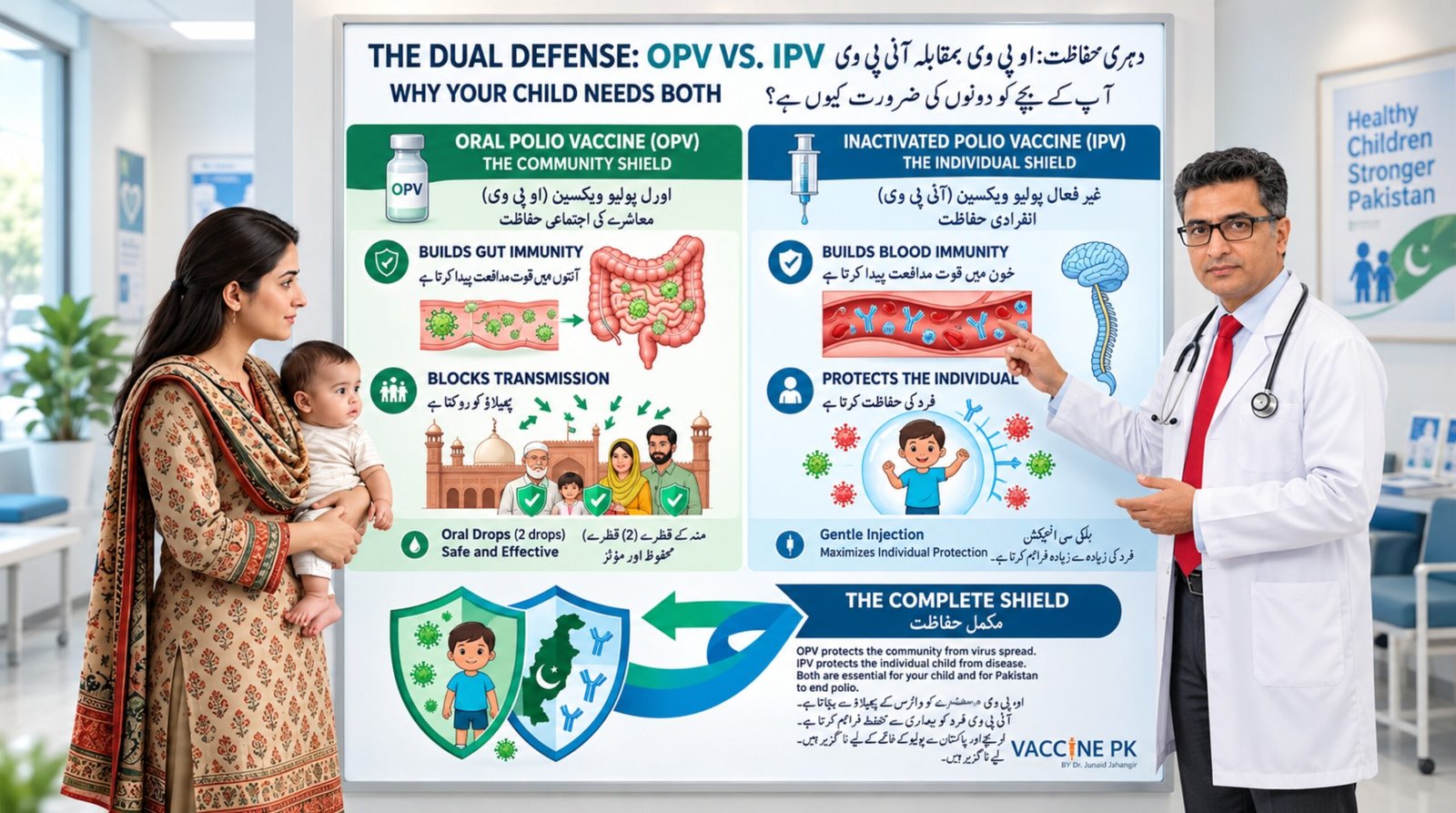
As we covered in our OPV guide, the oral drops build "mucosal immunity" inside the gut. They act as the outer wall of a fortress, neutralizing the virus before it can multiply.
However, biology is never absolute. In certain high-risk situations—perhaps the child was immunocompromised, the viral load in the contaminated water was exceptionally high, or the OPV gut immunity had not fully matured—the wild poliovirus can breach this outer wall.
Once the virus breaks through the intestinal lining, it enters the infant's bloodstream. This phase of the infection is known as viremia.
The Attack on the Central Nervous System
Once the poliovirus is circulating in the bloodstream, it races toward its ultimate target: the central nervous system. The virus crosses the highly selective blood-brain barrier and aggressively invades the spinal cord.
Specifically, the poliovirus targets and destroys the anterior horn cells (motor neurons) in the spinal cord. These are the crucial nerve cells responsible for transmitting signals from the brain to the muscles. When these neurons are destroyed by the multiplying virus, the muscles of the legs, arms, and sometimes the lungs instantly lose their neurological connection to the brain.
This results in Acute Flaccid Paralysis (AFP). Because nerve cells do not regenerate, this paralysis is entirely irreversible. There is no cure.
This terrifying pathology is exactly why the medical world realized that relying solely on gut immunity (OPV) was not enough. We needed a secondary, impenetrable inner fortress. We needed antibodies patrolling the bloodstream. We needed IPV.
The Science of IPV: Building the Inner Fortress
The Inactivated Polio Vaccine (IPV) was originally developed by Dr. Jonas Salk in 1955. It is considered one of the most important medical breakthroughs of the 20th century, and its core science remains the gold standard for individual polio protection today.
What Does "Inactivated" Mean?
Unlike the OPV drops, which contain a live, weakened virus, the IPV injection contains a completely dead virus.
In the laboratory, scientists take all three strains of the poliovirus and expose them to a powerful chemical called formalin (a solution of formaldehyde). This chemical process completely dismantles the virus's ability to replicate, move, or cause disease. The virus is biologically "killed" or "inactivated."
However, while the virus is dead, its outer protein shell (the antigen) remains perfectly intact.
Systemic Immunity: The IgG Antibodies
Because the virus is dead, it cannot be given orally (the digestive acids would simply destroy the dead proteins before the immune system noticed them). Therefore, IPV must be injected directly into the body—usually deep into the muscle (intramuscularly) or just under the skin (subcutaneously).
When Dr. Junaid Jahangir Abbasi administers an IPV injection, the dead viral proteins are introduced directly to your baby’s systemic immune system. The body’s adaptive immune system (specifically the B-cells) recognizes these foreign proteins and immediately begins mass-producing highly specific IgG antibodies.
These IgG antibodies are deployed directly into the infant's bloodstream. They become a highly trained, biological security force patrolling the blood 24 hours a day.
How IPV Saves Lives
If the wild poliovirus ever breaches the baby's gut (bypassing the OPV defenses) and enters the blood, the IPV-generated IgG antibodies are waiting. The antibodies instantly bind to the wild virus, neutralizing it and flagging it for destruction by white blood cells.
The virus is destroyed in the bloodstream before it can ever reach the blood-brain barrier, and before it can ever attack the spinal cord.
OPV (The Drops): Stops the virus in the gut, preventing the child from spreading the disease to others. It protects the community.
IPV (The Injection): Stops the virus in the blood, absolutely guaranteeing that the virus cannot cause paralysis. It protects the individual child.
This dual-layered strategy is the global standard of care, and it is why your child unequivocally needs both forms of the polio vaccine.
The Private Advantage: Painless Integration with Hexaxim
While the scientific necessity of IPV is undeniable, the physical reality of administering it can be distressing for parents and infants alike.
In the standard government Expanded Programme on Immunization (EPI) schedule, IPV is provided as a standalone, separate injection. This means that at the 14-week visit, an infant receiving government vaccines must endure the painful Pentavalent injection in one thigh, the Pneumococcal (PCV10) injection in the other thigh, and then a third separate needle prick for the IPV.
Subjecting a 14-week-old baby to three separate injections in a single clinical visit causes immense distress, prolonged crying, and high parental anxiety.
The Hexaxim 6-in-1 Solution at JJ Medics
At JJ Medics, we believe that world-class pediatric care should be as comfortable and trauma-free as possible. Because we operate in the advanced private sector, we offer a scientifically superior and far gentler alternative to the government schedule.
Instead of administering IPV as a standalone injection, Dr. Junaid Jahangir Abbasi utilizes Hexaxim, the premium, imported hexavalent (6-in-1) combination vaccine.
Hexaxim brilliantly combines six critical vaccines into one single, highly refined syringe:
Diphtheria
Tetanus
Pertussis (Acellular / Painless)
Haemophilus influenzae type b (Hib)
Hepatitis B
Inactivated Polio Vaccine (IPV)
By choosing Hexaxim at JJ Medics, your baby receives the exact same robust, lifesaving IPV bloodstream immunity, but without the need for an extra needle prick. Furthermore, because Hexaxim uses acellular pertussis technology, it drastically reduces post-vaccination fever and swelling.
You are providing your child with the ultimate inner fortress against polio, while simultaneously minimizing their physical pain and ensuring a peaceful, fever-free night's sleep for your family.
The IPV Routine Schedule in Pakistan
To ensure the infant's bloodstream is fully saturated with protective IgG antibodies during their most vulnerable developmental window, the administration of IPV follows a strict chronological schedule.
According to the official pediatric guidelines utilized in modern clinical practice, IPV is integrated into the primary infancy schedule alongside the combination vaccines:
Routine Schedule (<1 year): 3 doses, spaced by a minimum interval of ≥ 4 weeks apart.
Clinical Execution: When parents opt for the Hexaxim 6-in-1 vaccine at JJ Medics, the infant seamlessly receives their IPV doses at exactly 6 weeks, 10 weeks, and 14 weeks of age.
This three-dose primary series is mathematically designed to guarantee near 100% seroconversion, meaning the baby's immune system will successfully generate the maximum possible amount of polio-neutralizing antibodies.
Missed Doses? The IPV Catch-Up Protocol
Despite a parent's best efforts, life in the twin cities is unpredictable. Severe weather, family emergencies, or unexpected infant illnesses frequently cause delays in routine clinic visits.
When a parent realizes they are late for a vaccination appointment, panic often sets in. A common misconception is that if the 4-week gap stretches into a 3-month gap, the vaccine series is ruined and must be restarted from the beginning, subjecting the baby to extra, unnecessary injections.
Dr. Junaid Jahangir Abbasi and the national clinical guidelines are unequivocally clear on this matter: Missed doses? Don't restart—continue from the last valid dose. Catch up today for a healthier tomorrow!
Because IPV is a highly stable, inactivated vaccine, the immune system's memory (B-cells) will not forget the first dose, even if a significant amount of time has passed. Here is the exact catch-up protocol we utilize at JJ Medics based on your child's age:
Catch-Up for Toddlers (1 to 2 Years Old)
If your toddler is between 12 and 24 months old and their vaccination card shows they missed one or more doses of their combination vaccine (and therefore missed their IPV), the clinical directive is to "Complete missed doses."
Scenario: If your child received Hexaxim at 6 weeks but missed all subsequent appointments, they have only had one dose of IPV.
Action: Dr. Junaid will administer Dose 2 immediately during your visit. We will then schedule Dose 3 utilizing the safe, accelerated catch-up interval. Because the minimum allowable gap between IPV doses is ≥ 4 weeks, we can safely administer the final dose just one month later, rapidly closing the child's window of vulnerability.
Catch-Up for Older Children (2 to 5 Years Old)
If an older child presents to the clinic completely unimmunized, or partially immunized, the directive remains the same: "Complete according to EPI schedule."
We will evaluate the exact number of missed doses.
We will administer the missing IPV doses (often via a standalone injection or an age-appropriate combination vaccine if other boosters are required), strictly maintaining the minimum 4-week interval between any required subsequent doses.
By the time the child enters primary school, their bloodstream immunity will be perfectly up to date, ensuring they are safe from any localized polio outbreaks.
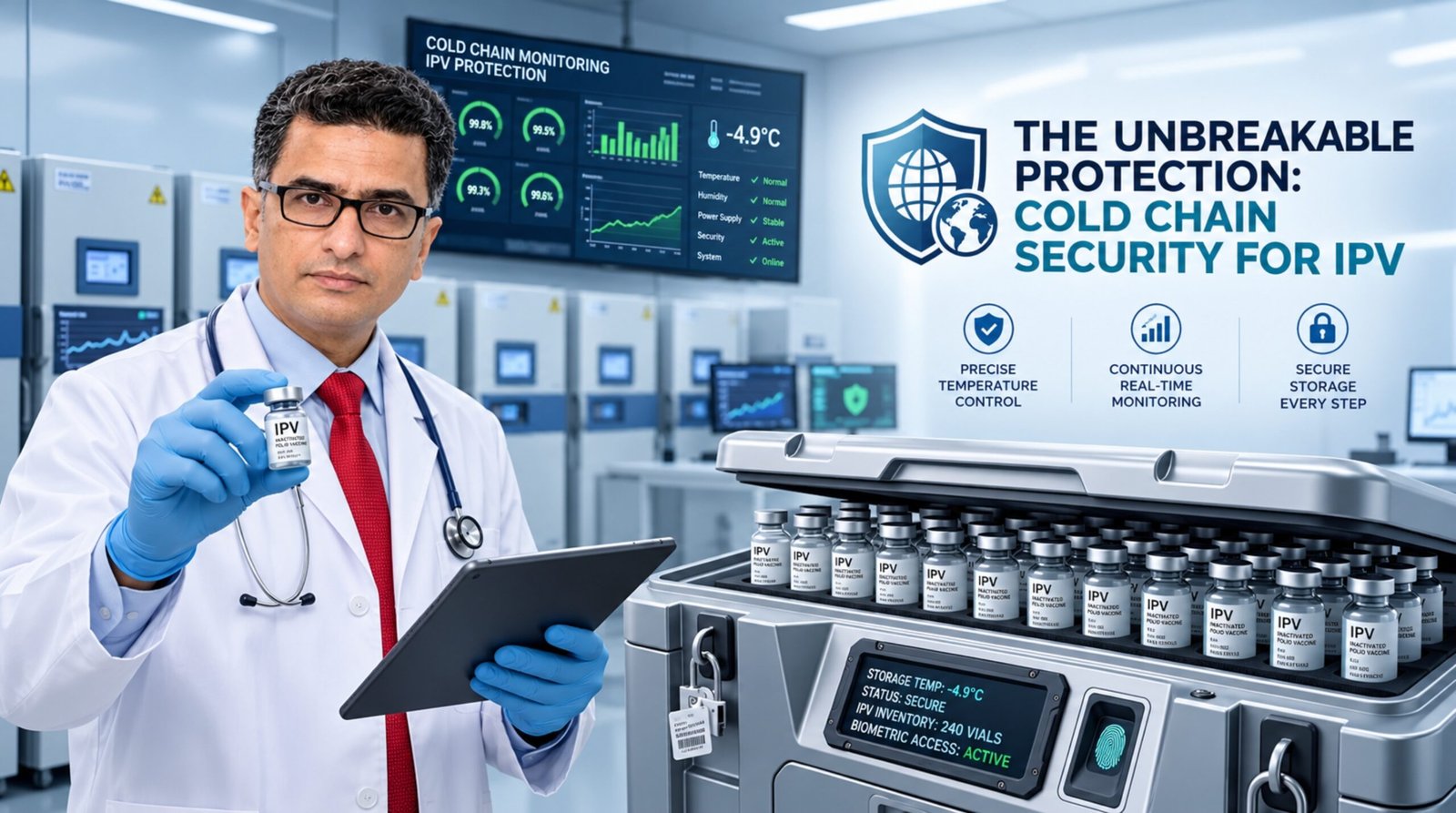
Unbreakable Protection: Cold Chain Security for IPV
A recurring theme in our educational guides is the absolute fragility of vaccines. As a parent, choosing to invest in IPV or the premium Hexaxim vaccine is only half the battle. The other half is ensuring the clinic you choose has not compromised the biological integrity of the vial before it reaches your child.
While live vaccines (like OPV and MMR) are highly sensitive to heat, inactivated combination vaccines that contain IPV face a different, equally devastating threat: Freezing.
The Danger of Adjuvant Agglomeration
Inactivated vaccines like IPV (and combination vaccines like Hexaxim) do not contain living viruses. Because the dead proteins are relatively weak on their own, biochemists add a specialized chemical called an "adjuvant" to the vaccine. The adjuvant (typically an aluminum salt) acts as an irritant, waking up the immune system and forcing it to notice the dead polio proteins.
These microscopic aluminum particles are incredibly sensitive to cold temperatures. If a clinic stores vaccines in a standard domestic kitchen refrigerator, and the vial is pushed too close to the back wall where temperatures drop below 0°C, the vaccine freezes.
When it freezes, the microscopic aluminum particles undergo a process called agglomeration. They permanently clump together into large, heavy microscopic masses. When the vaccine thaws out, these clumps do not dissolve.
If a freeze-damaged IPV or Hexaxim vaccine is injected into a baby:
The clumped proteins cannot be processed by the immune system, meaning the baby receives zero immunity against polio.
The large aluminum clumps can cause a painful, sterile abscess or a hard, permanent lump under the baby’s skin at the injection site.
The JJ Medics Zero-Compromise Policy
You cannot visually tell if a vaccine has been previously frozen just by looking at the liquid. You must rely on the technological infrastructure of the clinic.
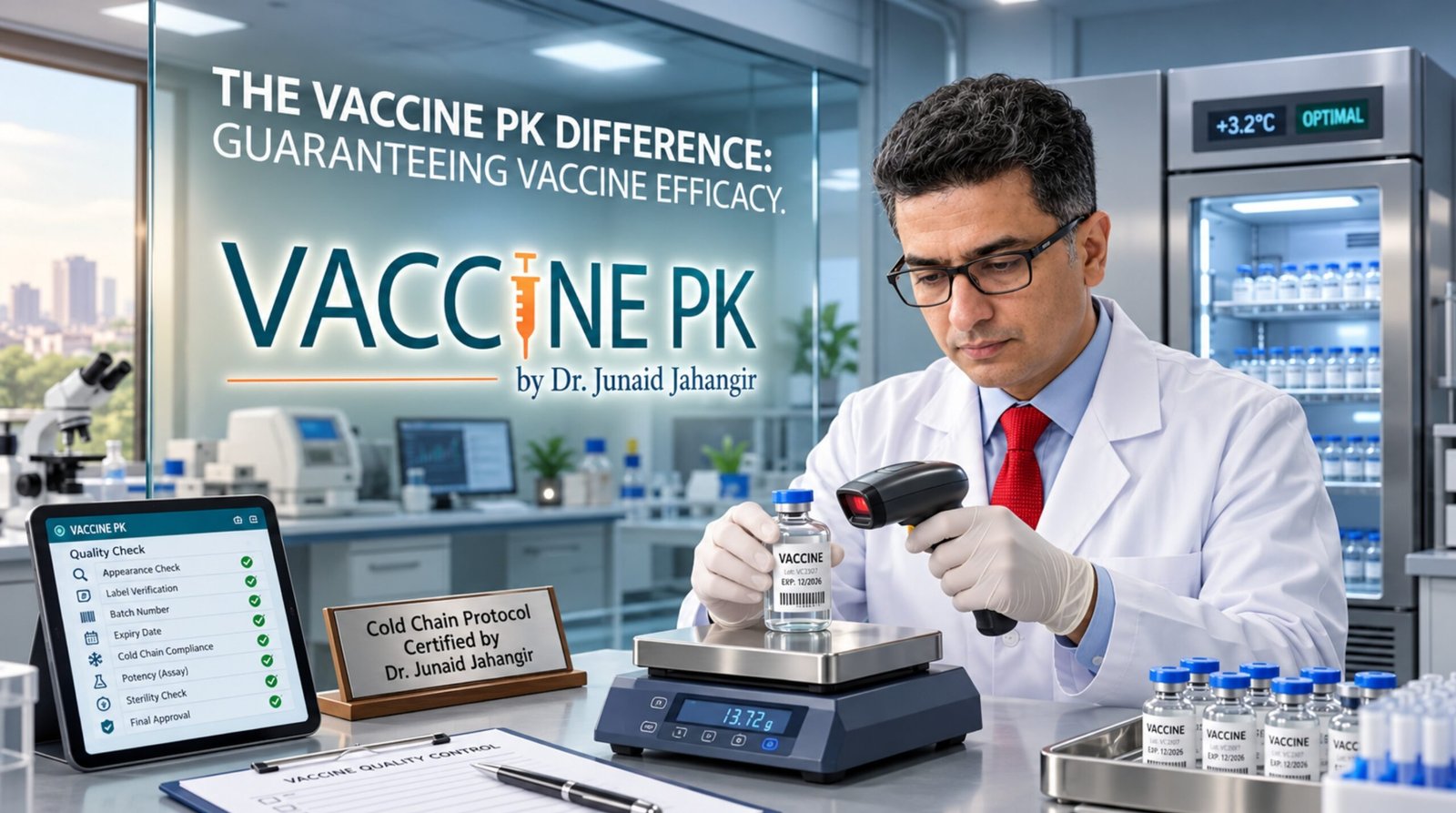
At JJ Medics, we have implemented a zero-compromise policy regarding cold chain management. We absolutely never use domestic refrigerators. Our facility is equipped with advanced, medical-grade Ice-Lined Refrigerators (ILRs).
These specialized units are fully certified by the World Health Organization (WHO). They utilize thick polyurethane insulation and an internal lining of specialized ice packs. This guarantees that the internal temperature remains strictly locked in the safe zone of +2°C to +8°C.
Even if the national power grid in Islamabad fails completely, our ILRs (backed by a dedicated solar power system) will maintain this perfect thermal corridor for up to 15 hours. Furthermore, our continuous digital temperature loggers monitor the environment 24/7, ensuring that the IPV injection your child receives has never suffered a single degree of thermal trauma.
Conclusion: Securing the Inner Fortress
Eradicating polio requires a comprehensive, multi-layered approach. The oral drops (OPV) are vital for stopping the transmission of the virus within our communities in Pakistan. But the Inactivated Polio Vaccine (IPV) is the ultimate, non-negotiable insurance policy for your individual child. It is the inner fortress that stands between a circulating virus and irreversible paralysis.
By utilizing the premium Hexaxim 6-in-1 combination vaccine at JJ Medics, we provide this critical bloodstream immunity without subjecting your infant to extra, painful needle pricks. And by strictly adhering to scientifically backed catch-up schedules and flawless cold chain management, we guarantee that this biological shield is both safely administered and 100% potent.
Do not leave your child’s neurological health to chance. Ensure their inner fortress is fully built and perfectly maintained by partnering with trusted pediatric experts.
Ready to Protect Your Child’s Future?
Whether your infant is due for their 6-week primary immunizations, or you need to design a safe, accelerated catch-up plan for missed doses, Dr. Junaid Jahangir Abbasi is here to help.
Location: Plot 20, Street 38, Margalla Town Phase 2, Islamabad.
In-Clinic Timings: Monday to Friday, 04:00 PM – 09:00 PM.
Video Consultations: Monday to Friday, 09:00 AM – 09:00 PM.
Book Your Appointment Now: Call us directly at 051-8151800 or use our integrated WhatsApp booking feature on VaccinePK.com for world-class, stress-free pediatric care.
]]>