
The term "penta" means five. The Pentavalent vaccine is a biochemical marvel that protects your baby against five distinct, life-threatening infectious diseases—Diphtheria, Tetanus, Pertussis, Hepatitis B, and Haemophilus influenzae type b (Hib)—all delivered in a single injection.
However, the sheer power of this vaccine often brings a wave of parental anxiety. You may have heard stories from other parents about the high fevers and prolonged crying associated with the government-issued Pentavalent shot. Furthermore, if your child has missed their 6, 10, or 14-week appointment, looking at the complex catch-up schedule for a 5-in-1 vaccine can be incredibly overwhelming.
At JJ Medics, located in Margalla Town Phase 2, Islamabad, Dr. Junaid Jahangir Abbasi believes that world-class pediatric care is built on transparency and parental empowerment. You should never feel confused about what is being injected into your child's body, nor should you panic if a dose is delayed.
We will meticulously unpack the science behind the Pentavalent (DTP-HepB-Hib) vaccine. We will detail the specific enemies it defeats, explain the exact catch-up intervals required if your child misses a dose, and reveal how modern private clinics like JJ Medics provide a scientifically superior, completely "painless" upgrade to this crucial immunization.
The Five Enemies: What Are We Protecting Against?
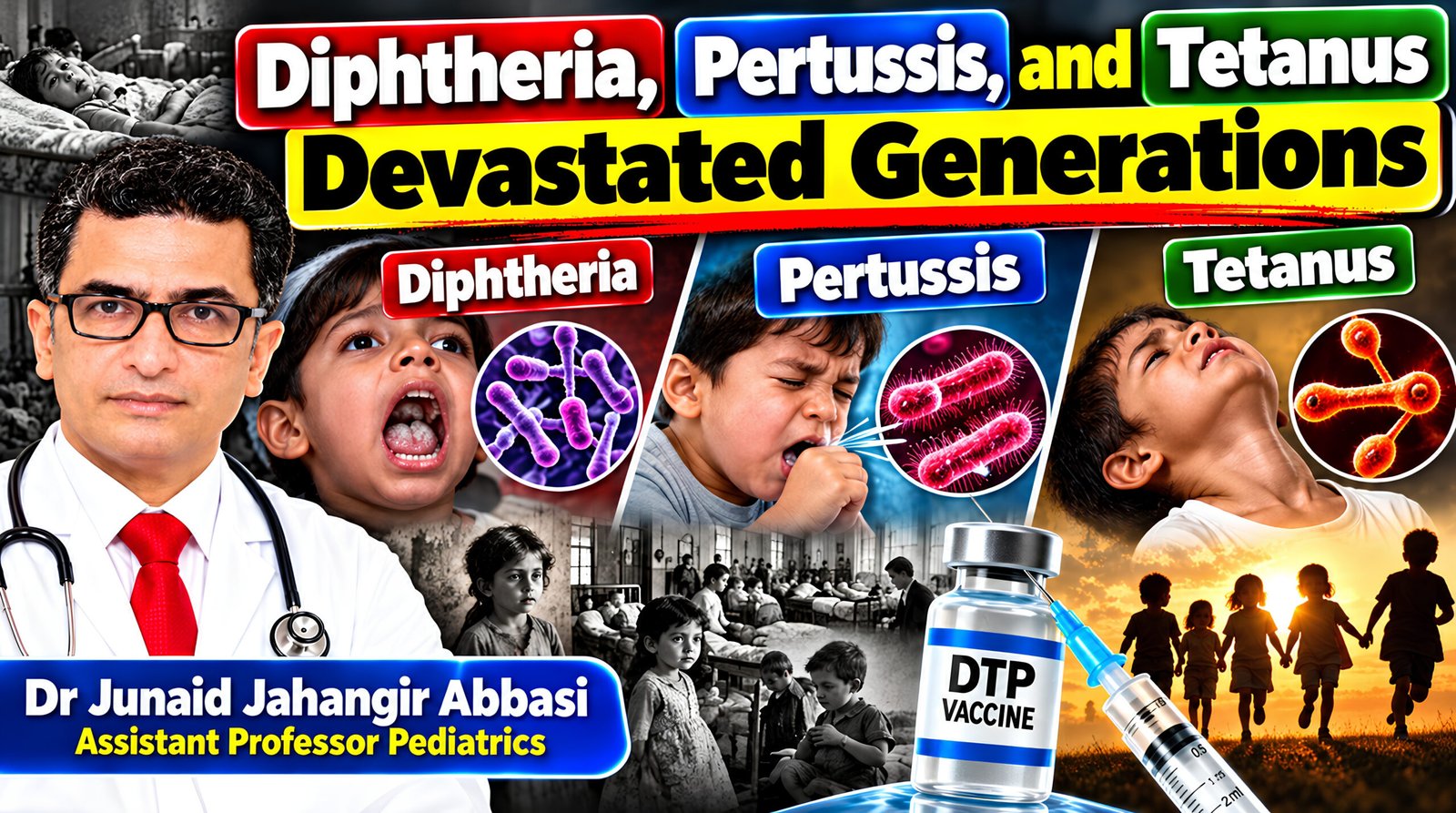
To understand the immense value of the Pentavalent vaccine, we must clearly identify the pathogens it is engineered to destroy. Before the widespread use of combination vaccines, these five diseases were among the leading causes of infant mortality globally. Today, they are entirely preventable.
1. Diphtheria (The 'D' in DTP)
Diphtheria is a severe, highly contagious bacterial infection caused by Corynebacterium diphtheriae. It primarily attacks the throat and upper respiratory tract. The bacteria release a potent toxin that destroys healthy tissue, leading to the rapid formation of a thick, grey, leathery membrane (a pseudomembrane) across the baby’s windpipe. This membrane can cause fatal suffocation within hours. If the toxin enters the bloodstream, it can cause catastrophic damage to the heart muscle (myocarditis) and the nervous system.
2. Tetanus (The 'T' in DTP)
Unlike the other diseases, Tetanus is not spread from person to person. The Clostridium tetani bacteria exist as highly resilient spores in soil, dust, and rust. They enter a child’s body through a cut, scrape, or even an unhygienic umbilical cord stump. Once inside, the bacteria produce a neurotoxin that attacks the central nervous system. This causes violent, agonizing, and uncontrollable muscle spasms—often starting with the jaw (lockjaw) and progressing to the respiratory muscles, making breathing impossible.
3. Pertussis / Whooping Cough (The 'P' in DTP)
Bordetella pertussis is an incredibly aggressive respiratory bacterium. In older children, it causes a severe, lingering cough. But in infants, it is terrifying. The bacteria paralyze the tiny, hair-like cilia in the lungs that normally clear away mucus. The infant’s airway fills with thick secretions, leading to violent, oxygen-depleting coughing fits. Desperate for air, the baby takes a sharp inhalation that produces a characteristic "whoop" sound. Tragically, many newborns simply stop breathing entirely (apnea) instead of coughing.
4. Hepatitis B (HepB)
Hepatitis B is a stealthy viral infection that specifically targets and attacks the liver. It is highly infectious and transmitted through bodily fluids. If an infant contracts Hepatitis B, their immature immune system is usually unable to fight it off, leading to a 90% chance of developing a chronic, lifelong infection. This chronic state drastically increases the risk of severe liver cirrhosis, liver failure, and liver cancer in early adulthood.
5. Haemophilus influenzae type b (Hib)
Despite the confusing name, Hib is a bacterium, not the influenza virus. Before the Hib vaccine was integrated into the Pentavalent combination, it was the single leading cause of bacterial meningitis in children under five. Hib meningitis causes aggressive inflammation of the tissues surrounding the brain and spinal cord, leading to permanent brain damage, profound deafness, or death. It also causes epiglottitis, a severe throat infection that can completely block a child’s airway.
The Science of Combination: How Does the Body Handle 5-in-1?
A very common concern raised during consultations at JJ Medics is the fear of "overwhelming" the baby's immune system. Parents often ask Dr. Junaid Jahangir Abbasi, "Is it really safe to give my tiny six-week-old baby five different vaccines all at the same exact time?"
From an immunological perspective, the answer is a resounding, scientifically proven Yes.
To put it in context, a baby’s immune system is an extraordinarily powerful and resilient biological machine. From the second a child is born, they are exposed to thousands of different antigens (bacteria, viruses, and fungi) every single day just by breathing the air, drinking milk, and touching toys.
The Pentavalent vaccine contains a microscopic, highly purified fraction of antigens compared to what a baby naturally encounters in their environment. Combining these vaccines into one syringe does not overwhelm the immune system; rather, it makes the process vastly safer and more efficient. By combining five vaccines into one, we drastically reduce the number of painful needle pricks your child has to endure, reducing their stress, minimizing the risk of injection-site infections, and ensuring they get comprehensive protection as rapidly as possible.
The Routine Pentavalent Schedule in Pakistan
Because infants are most vulnerable to these five diseases in their first few months of life, the national Expanded Programme on Immunization (EPI) has structured a rapid, overlapping schedule to build early immunity.
Routine Schedule (Under 1 Year Old):
Dose 1: Administered at 6 weeks of age.
Dose 2: Administered at 10 weeks of age.
Dose 3: Administered at 14 weeks of age.
The Golden Spacing Rule: The absolute minimum interval between these routine doses is ≥ 4 weeks (28 days). This specific chronological gap is not arbitrary. It takes exactly four weeks for the baby’s B-cells to fully process the vaccine proteins, multiply, and be ready to receive the next "booster" dose to solidify their immunological memory.
Missed Doses? The Exact Pentavalent Catch-Up Protocol
Life in the twin cities is inherently unpredictable. Whether due to severe weather, unexpected travel, or simply a miscommunication about clinical dates, it is incredibly common for infants to miss their 10-week or 14-week Pentavalent appointments.
When a parent realizes they are months behind schedule, they often assume the entire series is ruined and must be restarted, leading to immense anxiety.
Dr. Junaid Jahangir Abbasi wants to reassure every parent reading this: Missed doses? Don't restart—continue from the last valid dose.
The immune system has a long memory. If your child received Dose 1 and then disappeared for six months, the foundation built by Dose 1 is still perfectly intact. However, as a child grows older (moving from infancy into toddlerhood), the way their immune system responds to vaccines changes. Therefore, the catch-up spacing changes drastically.
Here is the exact protocol utilized at JJ Medics, based on the official Paediatric Catch-up Vaccination Schedule for Pakistan:
Catch-Up for Toddlers (1 to 2 Years Old)
If your child is between 12 and 24 months old and has missed one or more doses of their Pentavalent vaccine, we can no longer use the rapid 4-week spacing. To ensure maximum, durable immunity in an older immune system, the intervals must be extended.
The Catch-Up Spacing Rule:
Dose 1 to Dose 2: There must be a minimum gap of ≥ 2 months (8 weeks).
Dose 2 to Dose 3: There must be a massive minimum gap of 6 to 12 months.
Example Scenario: A 14-month-old toddler comes to JJ Medics completely unvaccinated. We administer Dose 1 immediately. We then schedule Dose 2 for when the child is 16 months old (a 2-month gap). Finally, we schedule the critical Dose 3 for when the child is between 22 and 28 months old (a 6 to 12-month gap).
This extended spacing allows the older toddler's immune system to undergo "affinity maturation," ensuring the final antibodies produced are of the highest possible quality and will last well into their school years.
Catch-Up for Older Children (2 to 5 Years Old)
If a child between the ages of 2 and 5 years presents with missing DTP-containing vaccines, the catch-up intervals remain exactly the same:
Dose 1 → wait ≥ 2 months → Dose 2 → wait 6-12 months → Dose 3.
A Critical Clinical Note for Older Catch-Ups: The official medical guidelines explicitly note that for catch-up schedules, clinicians must "Use DTP/DTaP as per age & product availability."
This is where the difference between a standard clinic and a premium private clinic like JJ Medics becomes profoundly important.
The Private Upgrade: Escaping the Pain of the Pentavalent
In the government sector, the Pentavalent vaccine uses a Whole-Cell Pertussis (DTwP) formulation. As we have explored in our dedicated pain management guides, whole-cell vaccines contain the entire dead pertussis bacterium, including all of its highly inflammatory cellular debris and endotoxins.
While highly effective, injecting this whole-cell formulation causes severe reactogenicity. Infants routinely experience high-grade fevers, intense thigh swelling, and 48 hours of agonizing, inconsolable crying.
Here is the crucial catch-up reality: As a child gets older, their immune system becomes stronger and more reactive. Giving a painful, whole-cell Pentavalent vaccine to a 3-year-old toddler for a catch-up dose will cause an even more severe inflammatory reaction than it would in a 6-week-old newborn. The fever and thigh swelling can be incapacitating, causing the toddler to refuse to walk for days.
The Painless Hexaxim Alternative
At JJ Medics, we strictly utilize Acellular Pertussis (DTaP) vaccines for both routine and catch-up schedules. Instead of the 5-in-1 Pentavalent, we offer the premium Hexaxim 6-in-1 vaccine.
Hexaxim completely removes the highly inflammatory bacterial cellular debris, leaving only the purified, necessary proteins. Furthermore, Hexaxim integrates the Inactivated Polio Vaccine (IPV) directly into the syringe, meaning we protect against six diseases (Diphtheria, Tetanus, Pertussis, Polio, Hib, HepB) with a single prick.
By utilizing Hexaxim (DTaP) during your catch-up visits:
Zero to Minimal Fever: Your toddler will rarely experience any temperature spike.
No Thigh Swelling: Your toddler will be able to run, play, and sleep normally on the very same day.
Fewer Injections: Because polio is included, we save your child from the psychological trauma of multiple needle punctures.
Upgrading to the painless Hexaxim formulation is the absolute safest, most comfortable way to catch an older child up on their missing DTP immunizations.
The Invisible Guardian: Protecting the Cold Chain
Whether you are administering the routine 6-week dose or managing a complex 2-year-old catch-up schedule, the biological integrity of the DTP-containing vaccine is paramount.
Vaccines like Pentavalent and Hexaxim do not contain live viruses; they contain dead, purified bacterial proteins. To make the immune system notice these dead proteins, biochemists mix them with an "adjuvant"—typically a microscopic aluminum salt.
The Catastrophic Danger of Freezing
Aluminum-adjuvanted vaccines are incredibly sensitive to cold temperatures. In standard domestic kitchen refrigerators (the kind used by many substandard clinics), temperature fluctuations are common. If a vaccine vial is placed too close to the freezer compartment and the temperature drops below 0°C, the vaccine freezes.
When it freezes, the microscopic aluminum particles undergo agglomeration. They permanently clump together into large, heavy masses. When the vaccine thaws, the damage is already done.
If a doctor injects a freeze-damaged Pentavalent or Hexaxim vaccine into your baby’s leg, the baby’s immune system cannot process the clumped proteins. They receive absolutely zero immunity against diphtheria, tetanus, or whooping cough. Furthermore, those large aluminum clumps remain trapped under the baby’s skin, causing a hard, painful, permanent nodule or a sterile abscess.
The JJ Medics Zero-Compromise Cold Chain
You cannot "see" if a vaccine was frozen yesterday just by looking at the vial. You must rely entirely on the clinic's technological infrastructure.
At JJ Medics, Dr. Junaid Jahangir Abbasi has instituted a zero-compromise policy. We utilize advanced, WHO-certified Ice-Lined Refrigerators (ILRs). These medical-grade units are structurally designed to maintain a flawless internal temperature of +2°C to +8°C.
Thanks to dense polyurethane insulation and internal ice linings, our ILRs can survive a complete failure of the Islamabad power grid for up to 15 hours without dropping or spiking in temperature. Supported by continuous digital data loggers and solar redundancies, we guarantee that the premium Hexaxim vaccine your child receives is 100% potent, safe, and biologically perfect.
Conclusion: Take Action Today for a Healthier Tomorrow
The Pentavalent vaccine—and its premium 6-in-1 painless counterpart, Hexaxim—is the heavy artillery of pediatric medicine. It provides an invisible, lifelong shield against five of the most terrifying, debilitating bacterial and viral infections known to humanity.
Navigating the pediatric immunization schedule can be daunting, particularly if your child has missed their routine visits. But guilt and anxiety serve no medical purpose. What matters is the action you take today.
By understanding the science, trusting in scientifically backed catch-up intervals (the ≥ 2-month and 6-12 month gaps for older children), and choosing a clinic that prioritizes painless acellular technology and flawless cold chain security, you can effortlessly restore your child’s defenses.
Don't leave your child unprotected against Diphtheria, Tetanus, and Whooping Cough.
Whether your infant is due for their 6-week routine visit, or your toddler needs a customized, painless catch-up plan, Dr. Junaid Jahangir Abbasi and the team at JJ Medics are ready to help.
Location: Plot 20, Street 38, Margalla Town Phase 2, Islamabad.
In-Clinic Timings: Monday to Friday, 04:00 PM – 09:00 PM.
Video Consultations: Monday to Friday, 09:00 AM – 09:00 PM.
Book Your Appointment Now: Call us directly at 051-8151800 or use our integrated WhatsApp booking feature on VaccinePK.com to schedule your stress-free pediatric visit.
]]>