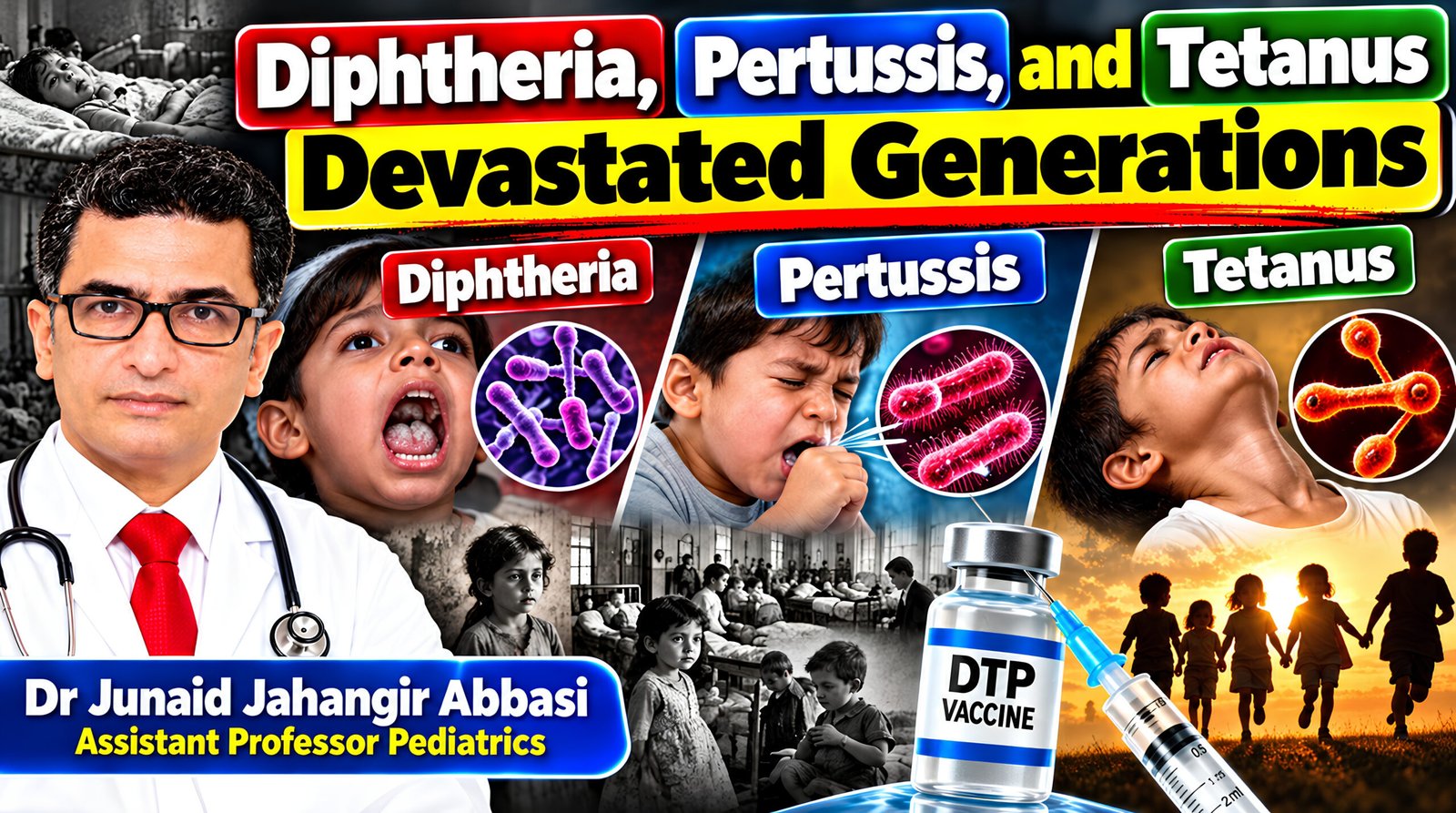

To protect children during these active years, pediatricians rely on one of the oldest, most recognized, and most historically significant immunizations in medical history: the Diphtheria, Tetanus, and Pertussis (DTP) vaccine.
However, the acronym "DTP" often strikes fear into the hearts of parents in Pakistan. For generations, the traditional DTP injection was infamous for causing high-grade fevers, intense muscle pain, and days of inconsolable crying. But pediatric science has evolved. Today, modern private clinics utilize highly refined, "painless" formulations known as DTaP. Furthermore, as your child grows past the age of seven, their maturing immune system requires an entirely different formulation known as Tdap.
Navigating these acronyms, understanding why school boosters are necessary, and figuring out the complex catch-up schedule for an older child who has fallen behind can be incredibly confusing.
At JJ Medics, located in Margalla Town Phase 2, Islamabad, Dr. Junaid Jahangir Abbasi is dedicated to demystifying pediatric medicine. We believe that when parents understand the biochemical engineering behind these vaccines, they can make confident, anxiety-free decisions for their children.
In this comprehensive, 2500-word pillar article, we will unpack the terrifying pathology of Diphtheria, Tetanus, and Whooping Cough. We will explain the critical scientific difference between painful whole-cell (DPT) and painless acellular (DTaP) vaccines, detail the exact preschool booster schedule, and decode the strict "Age 7 Shift" mandated by the official Paediatric Catch-up Vaccination Schedule in Pakistan.
The Three Ancient Enemies: What Are We Protecting Against?
Before we discuss the vaccine itself, we must understand the profound severity of the three bacterial pathogens it was designed to defeat. These are not mild childhood illnesses; they are aggressive, toxin-producing bacteria that carry high rates of mortality if left unchecked.
1. Diphtheria (The 'D' in DTaP)
Diphtheria is a devastating respiratory infection caused by the bacterium Corynebacterium diphtheriae. Before the vaccine was widely available, diphtheria was one of the leading causes of death among children worldwide.
The bacteria spread through respiratory droplets (coughing or sneezing). Once inside a child's throat, the bacteria release a highly destructive exotoxin. This toxin systematically kills healthy tissue in the respiratory tract. Within days, the dead tissue forms a thick, tough, grey coating called a "pseudomembrane." This membrane aggressively spreads across the tonsils, pharynx, and windpipe.
The physical membrane can completely block the child's airway, leading to fatal suffocation. Furthermore, if the diphtheria toxin seeps into the child's bloodstream, it attacks the heart muscle (causing severe myocarditis) and the central nervous system (causing paralysis).
2. Tetanus (The 'T' in DTaP)
Tetanus, commonly known as "lockjaw," is unique among vaccine-preventable diseases because it is not contagious. It cannot be caught from another person. Instead, the Clostridium tetani bacteria live as highly resilient spores in soil, dust, dirt, and animal feces.
These spores enter the child’s body through a physical break in the skin—a deep scrape from falling on a playground, a puncture wound from a rusty nail, or even a severe animal scratch. Once inside an oxygen-deprived wound, the spores activate and produce an exceptionally potent neurotoxin called tetanospasmin.
This neurotoxin attacks the central nervous system, specifically blocking the nerve signals that tell muscles to relax. This results in agonizing, uncontrollable muscle spasms. The spasms typically begin in the jaw (making it impossible for the child to open their mouth or swallow) and spread to the neck, back, and abdomen. The spasms can be so violent that they fracture the child's spine or tear their muscles. If the spasms reach the diaphragm, the child cannot breathe, leading to death.
3. Pertussis (The 'P' in DTaP)
Pertussis, widely known as Whooping Cough, is an aggressively contagious respiratory disease caused by Bordetella pertussis.
When inhaled, the bacteria attach to the tiny, hair-like cilia that line the upper respiratory system. The bacteria release toxins that paralyze these cilia, making it impossible for the lungs to clear mucus. The child's airway fills with thick, sticky secretions.
To clear the airway, the child is forced into violent, rapid coughing fits that can last for minutes, entirely depleting the oxygen in their lungs. Desperate for air, the child takes a massive, forceful inhalation, producing the characteristic high-pitched "whoop" sound. The coughing fits are so severe they frequently induce vomiting, burst blood vessels in the eyes, and can cause rib fractures. In young infants, the disease often presents as apnea—the baby simply stops breathing and turns blue.
The Scientific Evolution: From Painful DPT to Painless DTaP
The primary reason parents dread this specific vaccine is rooted in history. In the standard government Expanded Programme on Immunization (EPI), the DTP vaccine utilizes a Whole-Cell Pertussis (DTwP) formulation.
The Pathology of Vaccine Pain
In a whole-cell vaccine, scientists take the entire Bordetella pertussis bacterium, kill it in a laboratory, and inject the entire dead cellular structure into the child. The outer wall of this dead bacterium is covered in a highly inflammatory substance called an endotoxin.
When this whole-cell vaccine is injected, the child's innate immune system detects these endotoxins and launches a massive, systemic biological alarm. It treats the dead bacteria as an active, full-scale invasion. This triggers an intense inflammatory response, resulting in high-grade fevers, severe muscle pain, massive swelling at the injection site, and days of inconsolable crying and lethargy.
The Masterpiece of Acellular Technology (DTaP)
To spare children from this inflammatory trauma, private pediatric clinics like JJ Medics utilize the premium Acellular Pertussis (DTaP) formulation. The lowercase "a" stands for acellular.
This formulation represents a triumph of modern biochemical engineering. Instead of using the entire dead bacterial cell, biochemists scientifically dismantle the pertussis bacterium. They extract and purify only the specific antigenic proteins (like the pertussis toxoid) that the immune system actually needs to recognize the disease and build antibodies.
All the inflammatory cellular debris and endotoxins are entirely stripped away and discarded.
When Dr. Junaid Jahangir Abbasi administers a DTaP vaccine, the child's adaptive immune system learns how to defeat whooping cough without triggering the massive, painful inflammatory pathway. The result is a "painless" vaccine experience: zero to minimal fever, no severe muscle swelling, and a peaceful recovery that allows your child to continue playing and sleeping normally.
The Routine Schedule: The Necessity of Preschool Boosters
Immunity is not always permanent. While the initial primary series of vaccines provides critical defense during infancy, the levels of circulating antibodies in the child's bloodstream naturally begin to wane (drop) over time.
If we only vaccinated infants, they would become highly vulnerable to whooping cough and diphtheria by the time they entered crowded preschool and primary school classrooms. To prevent this, the pediatric schedule relies on booster doses.
The Primary Series (<1 Year): As detailed in our previous guides, infants receive their initial protection against these three diseases at 6, 10, and 14 weeks of age. (At JJ Medics, this is administered flawlessly within the 6-in-1 Hexaxim combination vaccine).
The First Booster (15 to 18 Months): As the infant transitions into toddlerhood, their antibody titers drop. A critical booster dose of DTaP is required between 15 and 18 months of age to aggressively spike their antibody levels back to maximum capacity.
The Preschool Booster (4 to 6 Years): Before a child enters the highly contagious environment of primary school, they require one final early-childhood booster. This dose ensures their cellular memory is locked in for the duration of their childhood.
Missed Doses? The DTaP Catch-Up Protocol
Life is unpredictable, and many parents inadvertently miss the 18-month or 4-year booster appointments. If you look at your child's immunization record and realize they have fallen behind on their DTaP vaccines, do not panic, and never restart the series.
The official Paediatric Catch-up Vaccination Schedule handles delayed DTP immunizations with precise, age-based directives to ensure safe and rapid immunity restoration.
Catch-Up for Toddlers (1 to 2 Years Old)
Directive: "Complete missed doses."
Action Plan: If your 18-month-old completely missed their primary infant series (the 6, 10, 14-week doses), we cannot use the rapid 4-week spacing. As an older toddler, their immune system requires longer intervals to undergo proper affinity maturation. We administer Dose 1, wait a minimum of 2 months for Dose 2, and then wait 6 to 12 months for Dose 3. At JJ Medics, we exclusively use painless DTaP-containing vaccines for this catch-up to prevent severe inflammatory reactions in older toddlers.
Catch-Up for Older Children (2 to 5 Years Old)
Directive: "Complete missed doses."
Action Plan: If a 4-year-old is missing their preschool booster or is partially unimmunized, the protocol is the same. We review the vaccination card and complete the required number of doses using the pediatric DTaP formulation, ensuring a minimum 6-month interval before administering the final preschool booster.
The Crucial Immunological Shift: The "Age 7" Rule (Tdap)
This is the most critical and highly specific rule in the entire catch-up schedule.
If you look closely at the official graphic for the Paediatric Catch-up Vaccination Schedule, there is a distinct dividing line when a child reaches their 7th birthday.
For Children < 7 years: The directive explicitly states to use DTP / DTaP.
For Children ≥ 7 years: The directive explicitly states to shift to Td / Tdap.
Why Does the Vaccine Change at Age Seven?
To understand this shift, we must look at how the human immune system matures. The pediatric DTaP vaccine contains a high concentration of the Diphtheria toxoid (indicated by the capital 'D') and a high concentration of the Pertussis antigen (indicated by the capital 'P').
As a child grows older, their immune system becomes significantly more robust and hyper-reactive. If a pediatrician were to inject the full-strength pediatric dose of the Diphtheria toxoid (capital 'D') into an 8-year-old child, an adolescent, or an adult, their mature immune system would overreact spectacularly. This intense localized reaction causes massive, painful swelling of the entire arm from the shoulder to the elbow.
To prevent this severe localized reaction, biochemists created the Tdap formulation specifically for older children, adolescents, and adults.
Decoding the Tdap Acronym
T (Capital T): Tetanus. The concentration of the tetanus toxoid remains at full strength because it does not cause severe local reactions, and full-strength tetanus protection is required throughout life.
d (Lowercase d): Diphtheria. The concentration of the diphtheria toxoid is significantly reduced (down to a fraction of the pediatric dose) to prevent massive arm swelling, while still providing an adequate immune boost.
a (Lowercase a): Acellular. It retains the highly purified, painless technology.
p (Lowercase p): Pertussis. The concentration of the pertussis antigens is also significantly reduced to accommodate the mature immune system.
Catch-Up for Adolescents (7 to 18 Years Old)
If an 8-year-old, a 12-year-old, or a teenager presents to JJ Medics with incomplete immunization records, we cannot and will not use the infant DTaP vaccine.
Action Plan: Dr. Junaid Jahangir Abbasi will design an age-appropriate catch-up schedule utilizing the adolescent Tdap vaccine.
If the teenager is completely unvaccinated, they will receive a 3-dose primary series of Tdap (and Td), appropriately spaced over a 6 to 12-month period, to build adult-level systemic immunity.
If they are fully immunized from childhood, they simply require a single Tdap booster around age 11 or 12 to maintain their defenses through adulthood.
The Invisible Shield: Protecting Adjuvanted Vaccines in the Cold Chain
Whether your child is receiving the pediatric DTaP booster at 4 years old or the adolescent Tdap vaccine at 12 years old, the biological integrity of the liquid inside the syringe is paramount.
These vaccines do not contain live viruses; they contain purified, dead toxoids and proteins. To force the immune system to react aggressively to these dead proteins, the vaccine relies on a chemical booster called an aluminum adjuvant.
As we have stressed throughout our educational series, aluminum adjuvants are the Achilles heel of modern vaccine storage. They are incredibly, disastrously sensitive to cold temperatures.
The Catastrophe of Agglomeration
If a substandard clinic stores its DTaP or Tdap vaccines in a standard domestic kitchen refrigerator, temperature fluctuations are inevitable. If a vial is placed too close to the back wall of the fridge and the temperature drops below 0°C, the vaccine freezes.
When the vaccine freezes, the microscopic aluminum particles undergo a permanent molecular shift known as agglomeration. The tiny, perfectly dispersed particles permanently clump together into large, heavy masses. When the vaccine thaws, these clumps do not dissolve.
If a doctor injects a freeze-damaged DTaP vaccine into your child’s arm:
The child's immune system cannot physically process the massive aluminum clumps. They receive absolutely zero immunity against Diphtheria, Tetanus, or Whooping Cough.
The heavy clumps remain trapped deep inside the child's muscle, leading to a hard, painful, permanent nodule, or a severe, sterile abscess that may require surgical drainage.
The JJ Medics Zero-Compromise Cold Chain
You cannot visually inspect a vial of DTaP to see if it was frozen during last night's power outage. You must rely entirely on the absolute professional integrity and technological infrastructure of your pediatric clinic.
At JJ Medics, we have completely eliminated the risk of thermal damage. We never utilize domestic refrigerators. Our state-of-the-art facility in Islamabad is exclusively equipped with advanced, medical-grade Ice-Lined Refrigerators (ILRs) that are fully certified by the World Health Organization (WHO).
These ILRs utilize thick, high-density polyurethane insulation and an internal lining of specialized ice packs. This guarantees that the internal temperature remains strictly locked in the safe corridor of +2°C to +8°C. Even during the most severe summer load-shedding in the twin cities, our solar-backed ILRs maintain perfect thermal stability for up to 15 hours without a single drop of grid electricity.
Supported by 24/7 continuous digital temperature loggers, we guarantee that every single dose of DTaP or Tdap your child receives is biologically flawless, potent, and safe.
Conclusion: Securing the School Years
The journey of pediatric immunization does not end on your child's first birthday. As they grow stronger, taller, and more social, the protection they received in infancy begins to fade.
The DTaP preschool boosters and the adolescent Tdap vaccines are critical medical interventions designed to ensure your child remains a tough target for three of the most devastating bacterial pathogens on earth. By upgrading to acellular, painless technology, you ensure these necessary boosters do not cause the trauma and severe fevers associated with older, whole-cell vaccines.
Furthermore, by understanding the strict biological rules—such as the mandatory shift to the reduced-dose Tdap formulation at age seven—you can confidently navigate catch-up schedules without fear of massive localized reactions.
Don't Send Your Child to School Unprotected
Whether your toddler is due for their crucial 15-month DTaP booster, your 5-year-old needs their final preschool shot, or your teenager requires a customized Tdap catch-up plan, Dr. Junaid Jahangir Abbasi and the specialized clinical team at JJ Medics are ready to provide world-class, stress-free care.
Location: Plot 20, Street 38, Margalla Town Phase 2, Islamabad.
In-Clinic Timings: Monday to Friday, 04:00 PM – 09:00 PM.
Video Consultations: Monday to Friday, 09:00 AM – 09:00 PM.
Book Your Appointment Now: Call us directly at 051-8151800 or use our integrated WhatsApp booking feature on VaccinePK.com to secure your child’s safe and seamless vaccination visit.
]]>